
As production equipment becomes increasingly connected, network architecture plays an important role in communication reliability, diagnostics and future system expansion.
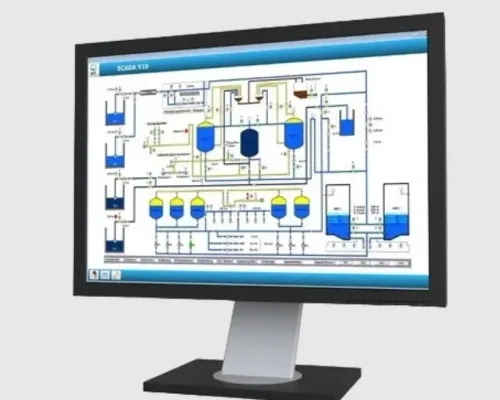
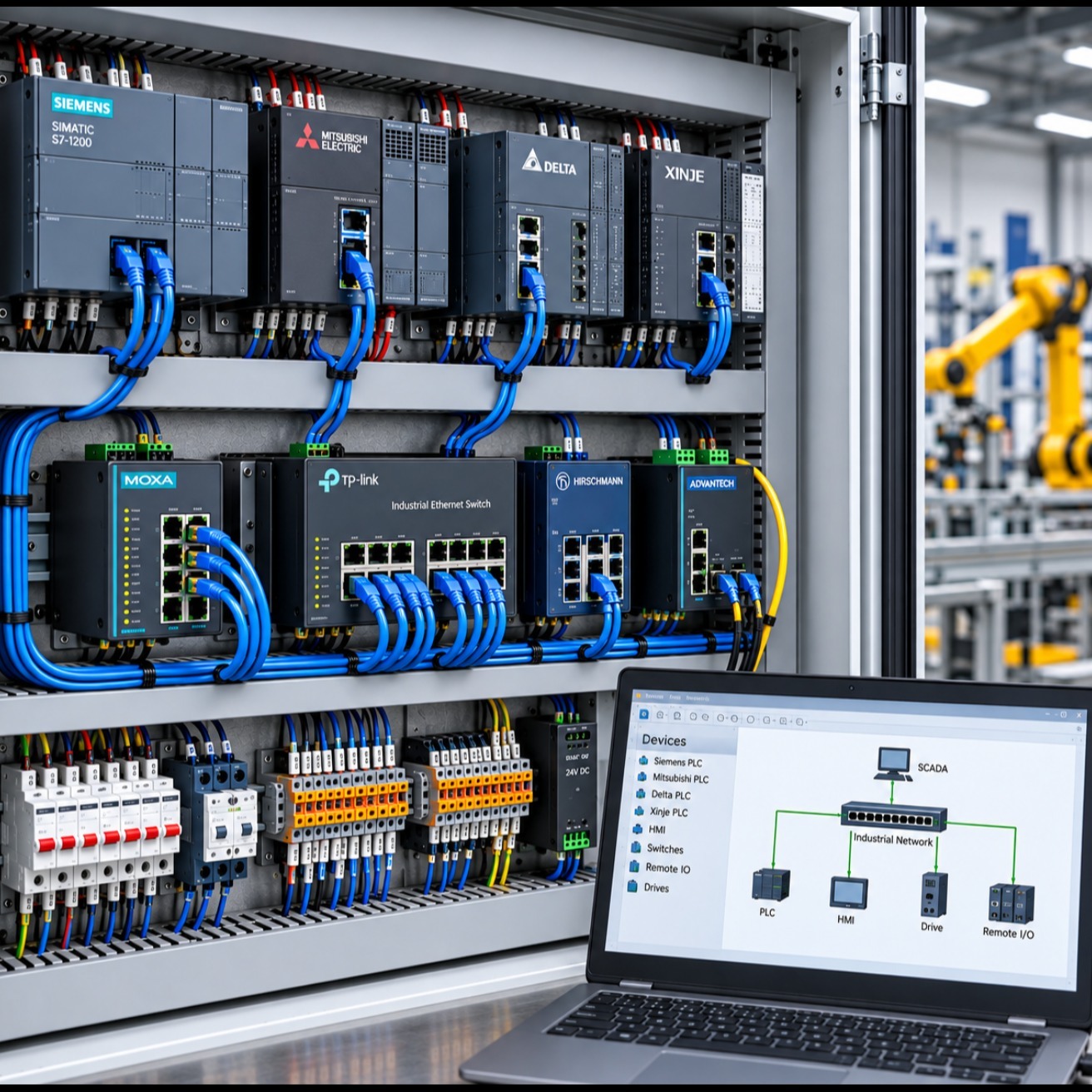
Industrial Networking provides the communication infrastructure connecting controllers, HMIs, drives, remote I/O and other automation devices.
Network planning should start by identifying which devices need to exchange information and what type of data they require. Communication speed, topology, device compatibility and future expansion can then be considered together.
Multi-brand environments make compatibility particularly important. A plant may contain Siemens, Mitsubishi, Delta or Xinje equipment acquired during different projects. A common physical connection does not automatically mean that every device will communicate without appropriate configuration and interface planning.
Diagnostics should also be considered. When communication problems occur, maintenance teams need practical ways to identify affected devices, network sections or connections.
The importance of the network can vary according to its role. A communication interruption affecting a monitoring screen may have different operational consequences from one affecting coordinated machine movement.
Future expansion is another factor. Network architecture should allow additional devices to be incorporated without unnecessarily redesigning the entire communication structure.
Documentation also supports long-term maintainability. Device information, addressing and network architecture should be recorded clearly so future troubleshooting does not depend solely on individual engineering knowledge.
Manufacturers reviewing network requirements should therefore assess reliability, compatibility, diagnostics and scalability alongside communication performance.
For organizations planning or upgrading automation communication infrastructure, IkodeAutomation can discuss Industrial Networking in Pune according to machine connectivity and system requirements.