

A course advertised as certified automation engineer training can lead to a vendor credential, a professional certification, or only an institute-issued completion certificate. You will be able to compare those credentials, test the practical value of a course, and identify the evidence an employer or manufacturer should accept before you enrol.
Key takeaways
- Verify the issuer, credential type, validity period and renewal rules.
- Choose delivery and entry requirements that match your work schedule and experience.
- Demand hands-on PLC, HMI, SCADA and industrial networking laboratory assessments.
- Compare total fees, study time, exam rules and manufacturer recognition.
What certificate will you actually receive?
The certificate that carries weight names its issuer, credential type, examination method, validity period and renewal rules. A “certified automation engineer course in dubai” is not automatically equivalent to a professional certification or a Dubai government licence.
| Credential category | Awarding body | What it proves |
|---|---|---|
| Vendor certification | PLC, DCS or automation manufacturer | Competence on a named platform; check the manufacturer’s online verification page and expiry rules |
| Professional certification | ISA, such as Certified Automation Professional (CAP) | Broader professional competence in control, instrumentation, safety and project management; eligibility and examination requirements apply |
| Functional-safety credential | Named safety-certification body | Knowledge of specified safety standards and lifecycle practices; confirm the exact standard and renewal requirement |
| Course-completion certificate | Training institute | Attendance or success in the institute’s own assessment; it is not automatically an independent professional certification |
For an automation engineer certification in dubai, ask who owns the syllabus and whether an independent examiner administers the test. Confirm that employers, manufacturers or a professional association in the UAE recognise the credential, and verify it through a public register or issuer portal.
A local training authorisation confirms the provider’s status; it does not make the certificate equivalent to ISA CAP or a manufacturer credential.
Reject vague claims such as “internationally certified” without a certificate sample, issuer name, candidate prerequisites and verification process. A credible course also assesses practical work: I/O checks, PLC structure, alarm handling, drive commissioning, network fault-finding, backup and restore, FAT/SAT records and safe isolation.
Does the delivery format and entry requirement fit your situation?
Ask for the delivery plan before you pay for certified automation training in dubai. The provider should state the exact Dubai venue, session dates, live-online platform, practical-lab arrangements and the percentage of learning completed remotely.
- In-person: verify the venue address, classroom hours, access to PLC, HMI and instrumentation equipment, and whether attendance is recorded at that site.
- Online: confirm live teaching times, instructor interaction, equipment demonstrations, software access, recording availability and technical support.
- Blended: require a written split between online theory and Dubai-based laboratory or assessment days. A brochure that says “flexible delivery” proves nothing.
Request the admissions sheet and match your situation against its stated conditions:
- Electrical, electronics, mechanical or automation qualification, including the minimum level accepted
- Prior PLC, SCADA, instrumentation or industrial-maintenance experience
- Mathematics requirement, such as algebra, electrical calculations or interpreting process signals
- English requirement for manuals, programming software, examinations and safety instructions
- Accepted job roles, such as controls technician, maintenance engineer, commissioning engineer or production engineer
- Required software, laptop specifications, employer letter or evidence of practical experience
Ask the admissions team to confirm eligibility in writing, not by saying “suitable for everyone.” If your role is maintenance rather than engineering, check that the course expects technician-level experience rather than design responsibility. A Dubai training venue does not make a course appropriate for your qualifications or job duties.
What must the syllabus and laboratory prove?
A credible industrial automation engineer course must let you operate a control cell, not merely answer PLC theory questions.
The laboratory should use at least one current PLC platform such as Siemens TIA Portal and S7, Rockwell Studio 5000 and ControlLogix, or Schneider EcoStruxure, with HMI/SCADA, remote I/O, industrial switches, a safety controller, variable-frequency drive, sensors, valves and 4–20 mA instrumentation.
| Area | Minimum syllabus and laboratory evidence | What failure exposes |
|---|---|---|
| Platforms | PLC, DCS, HMI/SCADA, safety PLC, VFD and remote I/O configuration | Whether skills transfer beyond a simulator |
| Programming | IEC 61131-3 Ladder Diagram, Function Block Diagram, Structured Text and Sequential Function Chart | Poor structure, unsafe logic and unreadable modifications |
| Standards | IEC 61131-3, IEC 61508 or IEC 61511, ISA/IEC 62443, and site safe-isolation procedures | Confusing programming ability with safe plant practice |
| Networks | PROFINET, EtherNet/IP or Modbus TCP; addressing, diagnostics and managed-switch basics | Inability to locate a node, cable or configuration fault |
| Cybersecurity | User accounts, role permissions, remote access, segmentation, patching, secure backups and recovery | Treating cybersecurity as ordinary PLC programming |
Require a practical assessment with documented I/O and loop checks, PLC program structure, alarm handling, drive commissioning, network diagnostics, backup and restore, fault finding and change control. The candidate should produce FAT and SAT evidence, isolate equipment safely, correct a simulated fault and return the cell to a tested operating state.
A multiple-choice exam alone cannot prove those abilities.
How do you compare time, fees and assessment rules?
The cheapest course is not the cheapest if its examination, software access or retake fee is charged separately. Compare the complete learner commitment, not only the advertised classroom hours.
| Item | Confirm before paying | Cost or risk if unclear |
|---|---|---|
| Duration and schedule | Total weeks, daily hours, weekday or weekend sessions, time zone and make-up policy | Shift conflicts or an unfinished course |
| Independent study | Expected hours for assignments, PLC practice, reading and project work | A part-time course becomes a second full-time workload |
| Fees | AED total, VAT, registration, books, software, laboratory access, examination and retake charges | Unexpected costs after enrolment |
| Intake and seats | Next start date, application deadline and maximum class size | You pay for a delayed intake or crowded laboratory |
| Examination | Assessment date, format, pass mark, practical tasks, examiner and whether an independent body administers it | You receive only an internal completion certificate |
| Attendance | Minimum percentage, lateness rules, absence evidence and replacement-session charges | You lose examination eligibility despite completing the work |
| Retakes | Number included, waiting period, fee, practical rework requirement and certificate impact | One failed attempt creates a large extra bill |
Ask for these rules in the enrolment contract. A credible provider states whether the exam covers fault finding, loop checks or practical commissioning rather than only multiple-choice questions.
Also confirm the exact certificate issued after a failed or missed examination, its validity period and any renewal requirement. Do not pay until the provider identifies who owns the exam and how you can verify the result independently.
Will the credential prove competence to a manufacturer or employer?
A credential proves job-ready ability only when an employer can verify both the assessment and the work behind it. Ask whether an independent examiner administered the test, whether the issuing body owns the syllabus, whether a public certificate-verification page exists, and whether renewal or continuing-professional-development requirements apply. “Internationally certified” alone proves nothing.
For automation certification for manufacturers, the strongest evidence is a role- and platform-specific project portfolio. Require anonymised records showing that the learner personally completed:
- An I/O list, loop-check sheet and PLC program with documented structure
- HMI screens, alarm priorities and historian or SCADA tags
- Drive commissioning records, motor parameters and fault-resolution notes
- Industrial-network diagnostics, including the fault, test method and restored result
- A controlled backup and restore using named software and firmware versions
- A change request, revision history and rollback plan
- FAT or SAT test cases with pass/fail results and punch-list closure
- Safe-isolation steps and commissioning sign-off
A multiple-choice score cannot demonstrate these abilities. Ask for a live practical test in which the candidate diagnoses a forced fault, modifies logic under change control, restores a backup and explains the safety consequence.
Also separate credentials: an ISA Certified Automation Professional (CAP) is a broad professional certification with eligibility requirements, not the automatic equivalent of a Dubai course certificate. IkodeAutomation |08048033508 can provide a useful integrator’s reality check by comparing a portfolio with the PLC, HMI, drives and support procedures used on an actual production line.
Related products
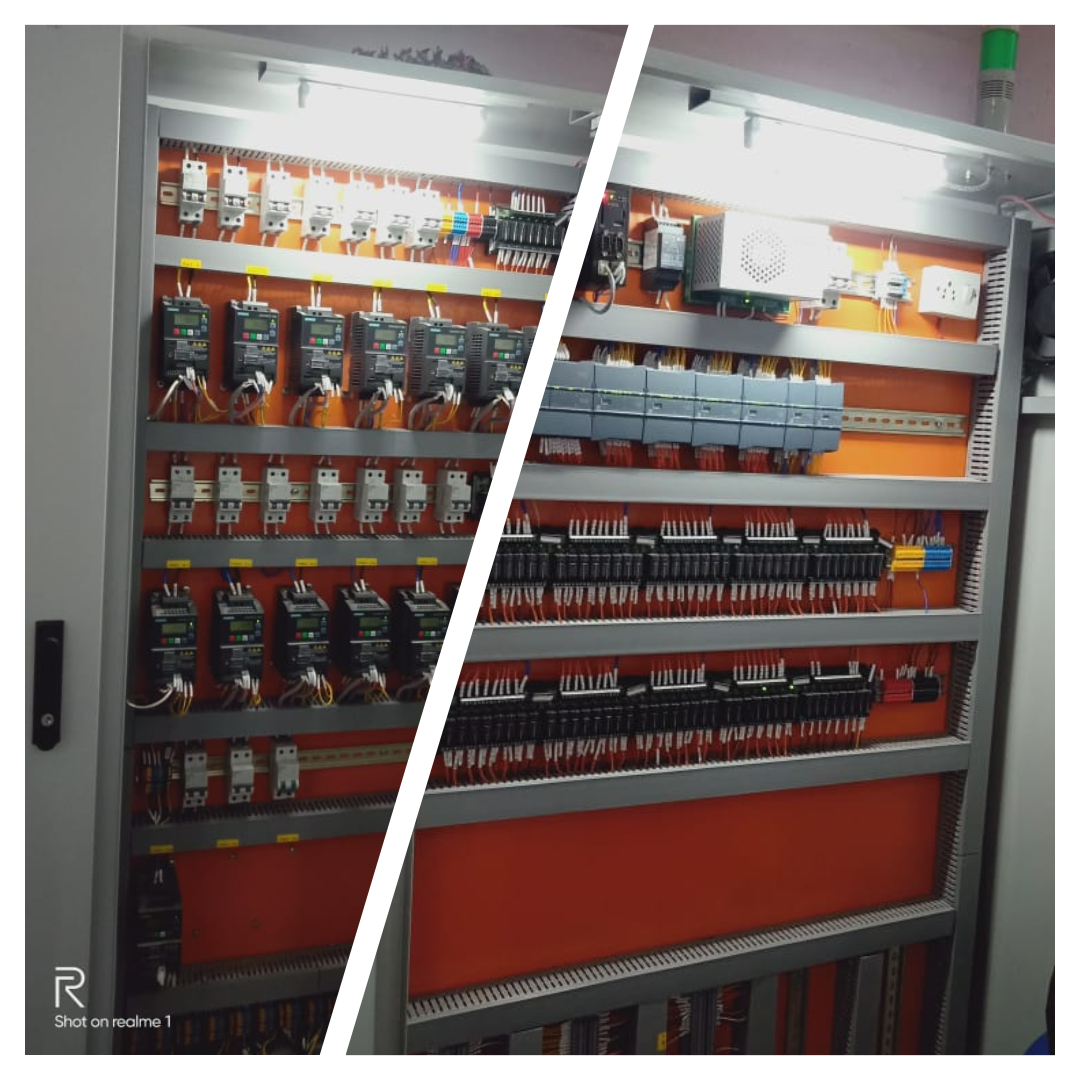 | Automation Training A Certified Automation Engineer is a professional who has earned certification in the field of automation and robotics. View product → |
 | Automation Training Certified Automation And Robotics Engineer A Certified Automation And Robotics program would typically cover the fundamentals of automation and robotics, as well as the technologies and tools... View product → |
Frequently asked questions
What certificate will you actually receive from automation training in Dubai?
Check the issuer, credential type, examination method, validity period and renewal rules. A course completion certificate is not automatically a professional certification or Dubai government licence.
How do you compare delivery formats and entry requirements?
Match classroom, online or blended delivery to your schedule, then verify prerequisites such as electrical knowledge, PLC experience, mathematics and required software access.
What should the syllabus and laboratory prove?
Look for practical work with PLCs, HMIs, SCADA, sensors, motor control, industrial networks, troubleshooting and documented assessments rather than lecture-only coverage.
How should you compare time, fees and assessment rules?
Compare total tuition, equipment or software charges, study hours, exam attempts, retake fees, attendance rules and the assessment format.
Will the credential prove competence to a manufacturer or employer?
Manufacturers and employers give more weight to independently assessed practical skills, named technologies, project evidence and a credential with clear verification and renewal rules.
Related products
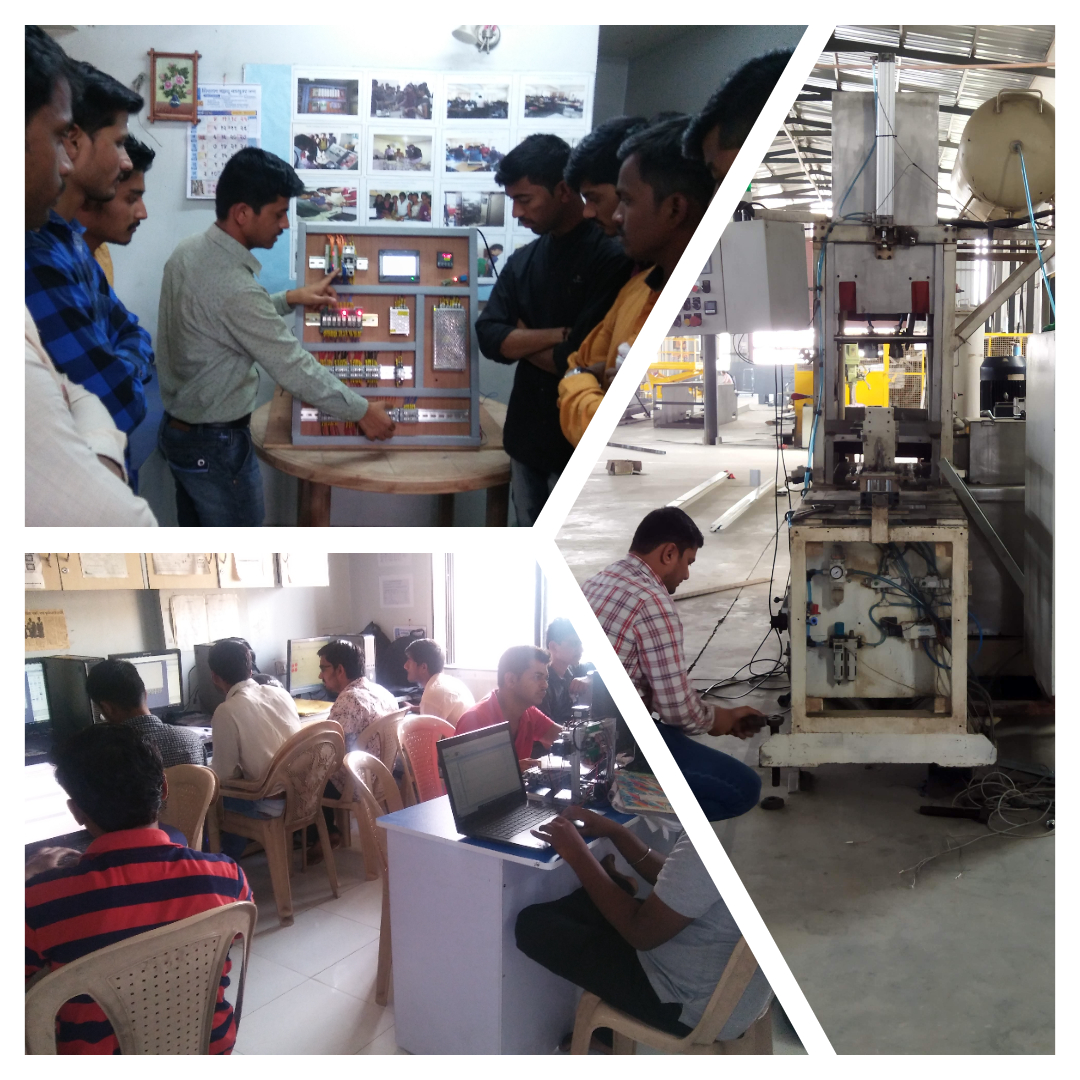 | Automation Training Fast Track Certified Automation Course A Fast Track Certified Automation program would typically cover the fundamentals of automation and robotics, as well as the technologies and tools... View product → |
 | Automation Training Diploma In Advanced Industrial Automation A Diploma in Advanced Industrial Automation program would typically cover the fundamentals of automation and robotics, as well as the technologies... View product → |