

A Pune plant can be called “Industry 4.0” after adding a dashboard, but a dashboard alone does not define a usable automation specification. You will be able to separate control, data, networking, cybersecurity and business-system requirements, then turn them into a testable scope for a new or brownfield plant.
Key takeaways
- Define whether you need local PLC-SCADA, connected manufacturing or a governed smart factory.
- Match OPC UA, MQTT and industrial protocols to your reference architecture and data flows.
- Separate control, supervisory, enterprise and remote-access traffic with explicit cybersecurity boundaries.
- Specify tags, timestamps, historian performance and factory acceptance tests before comparing bids.
Define the Automation Level Before Choosing Technology
Start with the automation level, not a brand or protocol. Ordinary PLC and SCADA automation keeps machine sequences, interlocks and operator displays local. Connected manufacturing adds reliable collection across lines. A smart factory adds governed data models, contextual records, analytics, maintenance or quality workflows, and controlled MES or ERP exchange.
| Level | What it does | Boundary |
|---|---|---|
| Ordinary automation | Runs sequences, interlocks and local operator displays | Machine or cell control |
| Connected manufacturing | Collects states, process values, counts and alarms across lines | Shared monitoring and reporting |
| Smart factory | Adds governed records, analytics, workflows and enterprise exchange | Manufacturing operations linked to business systems |
“Industry 4 point 0 automation in Pune” is not a compliance standard or a single product category. Your project brief must name the control layer, supervisory layer, manufacturing-operations layer, enterprise interface, cybersecurity scope and data-retention requirement.
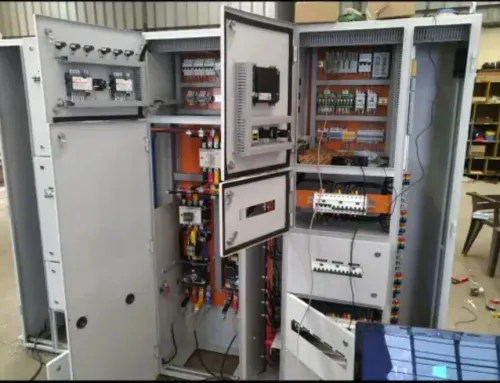
For a brownfield plant, make a read-only discovery phase mandatory before enabling commands or changing an existing interlock. Build an asset and interface register covering PLCs, PACs, robots, drives, sensors, serial devices, vendor APIs, hardwired signals and existing SCADA; record each item’s firmware, network address, protocol, owner and write permissions.
This exposes undocumented write paths before they defeat an existing safeguard.
Specify the Reference Architecture and Protocol Fit
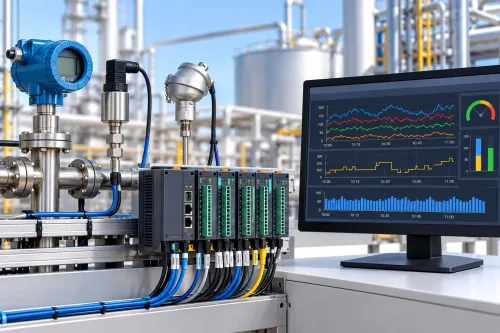
A workable reference architecture keeps control local and moves information upward: sensor or machine signal to PLC, PAC or safety controller; remote I/O and drives onto the control network; managed industrial Ethernet to supervisory systems; an edge gateway for protocol conversion, buffering and local logic; historian or time-series storage; then dashboards, MES and ERP interfaces.
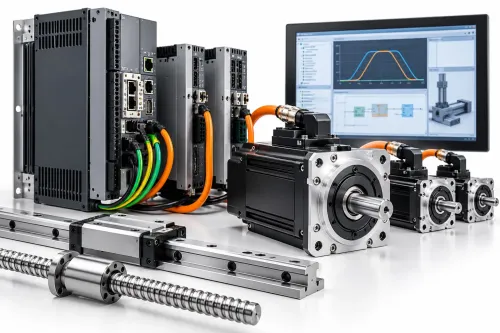
Production-critical motion, interlocking, emergency-stop and safety functions stay in the validated local controller, drive or robot safety system. A cloud service cannot guarantee deterministic latency, jitter-free operation or safe reconnection.
| Protocol | Best fit | Specification point |
|---|---|---|
| PROFINET | Siemens-centred real-time controller and device communication | Use with compatible devices |
| EtherNet/IP | Rockwell and CIP-based equipment | Use with compatible scanners and adapters |
| Modbus TCP | Simple register-based devices and utilities | Define register maps and scaling |
| OPC UA | Structured, discoverable machine and production data | Specify node names, units, quality codes, timestamps and alarm semantics |
| MQTT | Edge-to-platform publish/subscribe telemetry | Define topics, payload schema, retained messages and local buffering |
Require gateways for serial equipment, proprietary APIs, Modbus devices entering an OPC UA model, and assets lacking the target protocol. MQTT transports data; it does not define industrial semantics or control authority. For industry 4 point 0 automation solutions in Pune and smart factory automation in Pune, require these controls:
- Buffer data locally during network or cloud loss and reconcile duplicate, late or missing events after reconnection.
- Record the timestamp source, synchronisation method and quality status.
- Test PLC and gateway restart, network isolation, sensor failure, MES outage and backup restoration.
Design the OT Network and Cybersecurity Boundaries
1. Build five IEC 62443 zones: safety and control, supervisory systems, engineering access, plant IT, and outbound analytics. Connect them through documented conduits, not informal links. Specify managed switches, named VLANs, routing rules, firewall zones, approved conduits, and redundant switches or links wherever one failure would stop production.
Define the time-synchronisation method, timestamp source, clock-accuracy target, and offline buffering rules for industry 4 point 0 manufacturing in Pune.
2. Require a zone-and-conduit drawing that assigns duties to the asset owner, product supplier, and service provider under IEC 62443.
Require unique accounts, role-based access, separate engineering and operator privileges, MFA for remote access where supported, an approved jump host, audit logs, backup and restore procedures, patch and vulnerability management, supported firmware versions, and a vulnerability-disclosure process.
3. Treat labels as claims, not proof. Acceptance testing must verify permitted and denied flows; safety traffic must not depend on plant IT, a historian, MES, cloud service, or outbound analytics. Isolate the network, restart PLCs and gateways, and test historian or MES loss, remote-session logging, alarm continuity, buffered-data reconciliation, and reconnection.
4. Name the remote-session approver, access window, recorded commands and files, and rollback authority. Require production changes to be backed up, reviewed, reversible, and tested before release. Retain event logs and recovery evidence. A VLAN without these tests is decoration.
Set the Data Model, Historian and Performance Contract
1. Define the tag and record model before choosing dashboards. Each canonical tag must identify plant, area, line, asset, signal and state, then carry its engineering unit, source timestamp, server receipt timestamp, quality or status flag, sampling or event rate, batch, order, shift and product-family identifiers. Assign ownership for every calculated value.
2. Keep raw signals, calculated KPIs and validated production records in separate layers. Set retention by use: high-resolution short-term troubleshooting, production history, quality or regulatory records, and archived summaries. Document what happens to missing, duplicate, late and out-of-order events, including gateway buffering and clock drift.
Define OEE with one loss tree covering planned and unplanned downtime, speed loss, minor stops, scrap, rework, startup loss and changeover.
3. Make the performance contract depend on process criticality and network-load tests, not universal figures. Specify dashboard refresh time, alarm latency, historian availability, time-synchronisation accuracy, permitted data loss and recovery-time objective.
Add meters at useful boundaries such as major lines, compressed air, HVAC, utilities and process equipment, then relate energy to product, operating state, quantity, shift and product family. For smart factory automation in Pune, this context prevents an incoming utility total from masking line-level waste.
4. Use ISA-95 or IEC 62264 to map ERP orders, materials, equipment, production responses and quality results to manufacturing-operations objects. This discipline supports industry 4 point 0 manufacturing in Pune without confusing business transactions with control tags or undocumented flat tables.
Turn the Specification into a Comparable, Testable Bid
Require every bidder to submit the same evidence pack: a point list, asset and interface register, network diagram, IEC 62443 zone-and-conduit drawing, protocol map, tag dictionary, information-model ownership, dashboard wireframes, alarm philosophy, MES and ERP message definitions, backup plan, spare-parts list and change-control procedure.
| Bid response | Acceptance question |
|---|---|
| Gateway schedule | Which devices need gateways, and why? |
| Local-function register | Which interlocks, motion, safety and fallback functions remain local? |
| Outage design | How is data buffered, timestamped and reconciled after reconnection? |
| Recovery method | How will restoration from backup be proved? |
Run abnormal-condition tests, not just a normal dashboard demonstration:
- Remove machine power, restart the PLC and gateway, fail a sensor, isolate the network, and introduce clock drift.
- Send duplicate events, stop MES, stop the cloud connection, and restore the system from backup.
- Reconnect each isolated path, reconcile buffered data, and retain event logs, alarm history, recovery times and recovery evidence.
Set written response and restoration targets, remote-access approval steps, local technician training, supported firmware versions, custom-code ownership and production-change authority. Require unique accounts, approved remote sessions and a rollback record.
For industry 4 point 0 automation solutions in Pune, compare architecture, brownfield discovery and local support against identical requirements. Industry 4 point 0 automation in Pune is only comparable when each supplier states its test evidence and data responsibilities. A plant can assess IkodeAutomation |08048033508 on that basis rather than on a generic support promise.
Related product
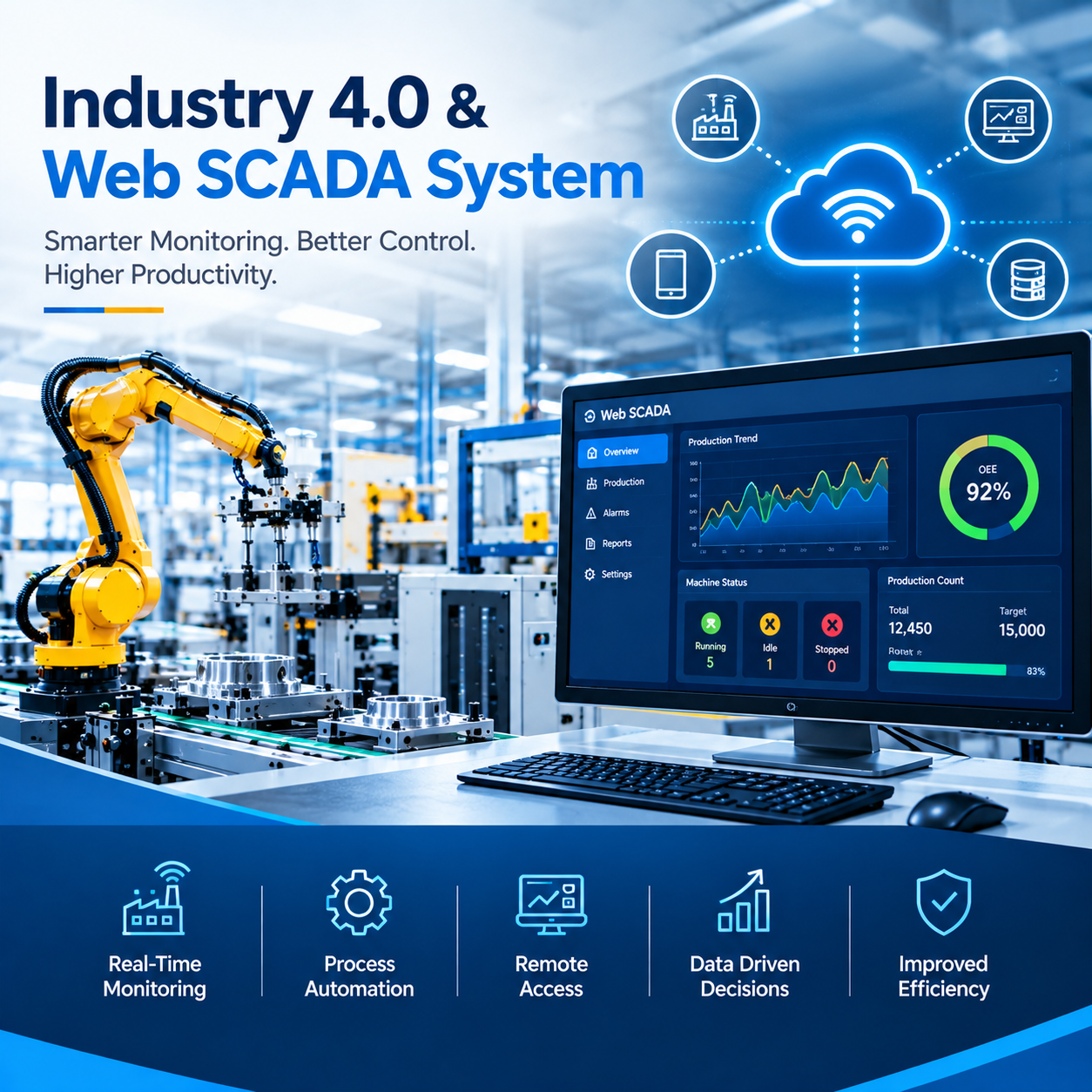 | Industrial Automation Solutions & System Integration Industry 4.0 & Web SCADA System Smart Industrial Monitoring and Web-Based SCADA Solutions Ikodeautomation provides Industry 4.0 and Web SCADA solutions for industrial automation,... View product → |
Frequently asked questions
How do you define the automation level for a Pune plant?
Separate local PLC-SCADA control from connected manufacturing and smart factory automation. Choose the smart factory level only when you need governed data models, contextual records, analytics, maintenance or quality workflows, and controlled MES or ERP exchange.
Which protocols should an Industry 4.0 automation specification include?
Specify protocols according to the reference architecture and system roles. Document where PLC, SCADA, OPC UA, MQTT, MES and ERP connections operate, along with required data direction, security and interoperability.
How should you set cybersecurity boundaries for plant automation?
Define zones and conduits between control, supervisory, enterprise and remote-access systems. State firewall locations, permitted connections, authentication, patching responsibility and remote-session controls.
What makes an automation bid comparable and testable?
Give every bidder the same architecture, tag list, data model, historian requirements, performance targets, cybersecurity controls and factory acceptance test criteria. Compare compliance against those measurable requirements rather than brand names.