
A pharmaceutical plant gains value from SCADA when operators can act on trustworthy process information without confusing a trend screen with a validated GMP record. By the end, you will be able to map SCADA to PLCs, HMIs, MES and building systems, design a batch workflow, and assess whether a Pune facility is ready for a controlled implementation.
Key takeaways
- Keep real-time visibility, alarms and trends in one supervised operator view.
- Assign control, sequencing, records and reporting to the correct automation layer.
- Treat SCADA data as a GMP record only with attributable, secure audit trails.
- Specify protocols, validation evidence and support scope before choosing a partner.
Where Pharma SCADA Creates Daily Manufacturing Value
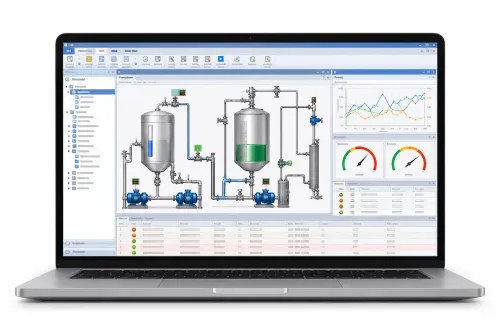
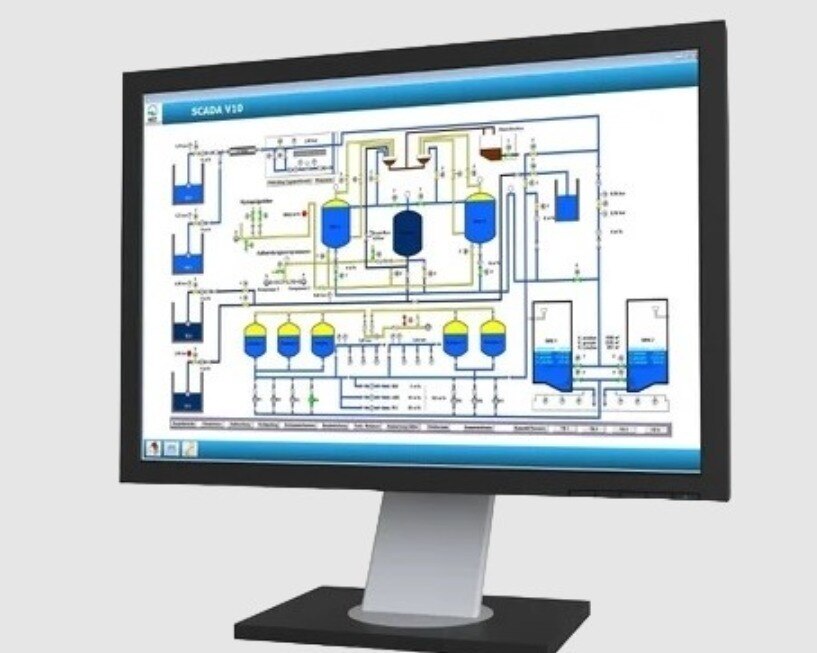
Pharma SCADA improves production decisions by putting current values, alarm status, trend context and approved operating limits on one supervised view. An operator can see whether granulator temperature is drifting, an autoclave phase is complete, or a filling line is waiting for a permissive before choosing an intervention.
During a shift, teams use pharma automation to:
- Acknowledge alarms, follow the defined response procedure and escalate uncorrected conditions.
- Compare live values with previous batches, approved limits and equipment phase status.
- Identify recurring stoppages, abnormal utility demand and process drift before they become deviations.
Utility operation gains the same visibility. Trending cleanroom differential pressure, purified-water conductivity, WFI temperature or HVAC supply conditions supports early intervention and investigation. Alarm priorities, limits, shelving, escalation and rationalized response procedures matter; adding alarms without control creates alarm flooding and hides a critical condition.
SCADA also improves review by linking operator actions, time-stamped events and process trends to approved procedures, calibration, maintenance, deviation and change-control workflows relevant to Schedule M. A trend is evidence for investigation, not automatic proof of batch release or water-system acceptance.
Specify separate retention, time synchronization, backup, restore testing and outage recovery: a historian provides trends, not a backup system or a release decision.
Which Automation Layer Should Own Each Function?
Assign ownership by consequence: the layer that can safely execute a function should not automatically own its scheduling, record, or release decision. This separation gives pharmaceutical automation a clearer validation boundary and prevents a pharma SCADA screen from becoming an unqualified batch system.
| Layer | Owns | Do not assign to it |
|---|---|---|
| PLC | Interlocks, sequences, permissives, PID loops, motor and valve control | Production scheduling or batch-record approval |
| HMI | Local machine commands, status, manual actions and operator prompts | Site-wide history, scheduling or electronic batch records |
| SCADA | Supervisory views, alarms, trends, historian collection and utility coordination | Validated batch execution or final product release |
| MES | Production orders, scheduling, recipe governance, material genealogy, electronic batch records and review workflow | Millisecond control or safety interlocks |
| BMS | Building HVAC, room pressure, temperature, humidity and facility alarms | Product recipe control or batch disposition |
Connect the layers with defined ownership, timestamps, user accounts and audit trails. SCADA may display MES batch status and BMS conditions, while PLCs retain control during network loss. Treat historian data as supporting evidence until the system preserves original values, metadata and audit history under the site’s GMP procedures, including Schedule M controls.
How a Batch Automation Workflow Controls Each Step
The workflow should lock an approved recipe to the product, equipment train, batch size and version before an operator can start. In pharma automation, ISA-88 separation keeps reusable equipment phases distinct from recipe parameters, preventing an approved change for one product from silently affecting another.
1. Identify the batch, raw-material lots, equipment status and operator credentials. Block the start if a calibration, cleaning record or permissive is missing.
2. Load the approved recipe and confirm setpoints, sequence, sampling points and expected yields. Require a second-person check for critical values.
3. Execute each phase through PLC-controlled equipment modules. Enforce temperature, pressure, time, flow and level limits, while prioritised alarms provide escalation and response instructions.
4. Record operator-initiated holds with reason, time and authorisation. Resume only after the defined condition is restored and the phase records the restart.
5. Route an out-of-limit result, missed step or failed permissive into a deviation workflow. Preserve the original value, metadata, audit trail and any abort or recovery action.
6. Reconcile material input, good output, rejects and process loss against theoretical yield. Send unexplained differences for investigation before release.
7. Present the completed electronic batch record for review, including signatures, alarms, holds, deviations and phase results. Quality approval must use controlled access and an audit-trailed electronic signature, not a historian trend alone.
When SCADA Data Becomes a Defensible GMP Record
A SCADA record is defensible only when the site can show who created each value, when, from which source, under which approved process, and whether anyone changed it. A pharma SCADA historian therefore needs record classification, controlled workflows, and review evidence—not merely attractive trends.
Map critical tags, recipes, alarms, reports, signatures, calibration results, and deviations to approved procedures and Schedule M controls.
1. Assign unique user accounts and role-based permissions; prohibit shared logins and restrict recipe edits, setpoint changes, acknowledgements, and record deletion.
2. Capture original values with units, source tag, timestamp, user, reason, and metadata; preserve prior values rather than overwriting them.
3. Maintain a computer-generated audit trail for creation, modification, and deletion attempts, and require authority checks and electronic signatures where 21 CFR Part 11 applies.
4. Synchronize PLC, SCADA, historian, and server clocks, then test alarm order, report calculations, interlocks, and signature meaning during risk-based validation.
5. Protect records with controlled retention, redundant collection, backups, restore tests, disaster-recovery procedures, and retrieval in a readable format; a historian alone is not a backup.
These controls support ALCOA+: attributable, legible, contemporaneous, original, accurate, complete, consistent, enduring, and available. Data integrity automation helps enforce them, but QA must review exceptions, audit trails, deviations, and changes against the approved batch record.
Test network and server outages too: the system must preserve, flag, or formally reconcile missing data rather than silently fill gaps.
How to Integrate Brownfield Equipment Without Losing Control
Use a layered retrofit: let each legacy asset retain safe local control while SCADA collects approved data and coordinates supervision. Do not make a new server the only place an old machine can run.
1. Inventory every interface and owner. Record PLC model, firmware, I/O, serial protocol, VFD parameters, instrument ranges, laboratory system, utility skid and existing alarms. Connect serial devices through managed gateways using protocols such as Modbus RTU, Modbus TCP or OPC UA; define read-only points before adding commands.
2. Preserve ISA-88 boundaries. Keep equipment modules and permissives in the PLC, while SCADA manages units, procedures, phases, recipes and operator prompts. This supports pharmaceutical automation across mixed generations without rewriting validated machine logic for every product.
3. Protect critical records at the boundary. Identify GMP data, retain original values with timestamps, user identity, source, units and metadata, and prevent silent overwriting. Use individual accounts, role-based privileges, audit trails and controlled engineering changes; data integrity automation fails if shared logins or editable historian tags destroy attribution.
4. Separate production, laboratory, utilities and remote support into OT zones and conduits. Permit only required traffic, isolate vendor access through approved jump hosts, and back up PLC programs, SCADA configurations, recipes and historian databases. Test restoration to a spare server and manual fallback during planned recovery drills, not after a failure.
What to Specify Before Selecting a Pharma SCADA Partner
Put acceptance criteria in the request for proposal, not after software selection. Require the partner to show where SCADA stops at supervision, where PLC or DCS owns control, and where MES or approved procedures govern batch release; a utility trend supports investigation, not release proof.
| Area | Specify | Reject if |
|---|---|---|
| Implementation | URS, FDS, hardware, interfaces, migration, backups, recovery tests, and pharma automation boundaries for batch automation | The proposal promises dashboards without recovery evidence |
| Validation | Risk assessment, traceability, IQ/OQ, audit trails, access control, data retention, and Schedule M change control | Validation is left entirely to your quality team |
| Cybersecurity | IEC 62443 zones and conduits, named accounts, least privilege, MFA for remote access, patching, logging, and engineering-change control | Contractors share accounts or use unrestricted remote desktop |
| Alarm management | Rationalization, priorities, limits, shelving, escalation, response procedures, and alarm-flood testing | More alarms are presented as better monitoring |
| Support and training | Response times, spares, documented backups, administrator training, operator drills, and refresher sessions | Training means a single handover demonstration |
Assess IkodeAutomation |08048033508 against these deliverables, including Pune-site support and evidence from comparable regulated projects.
Related products
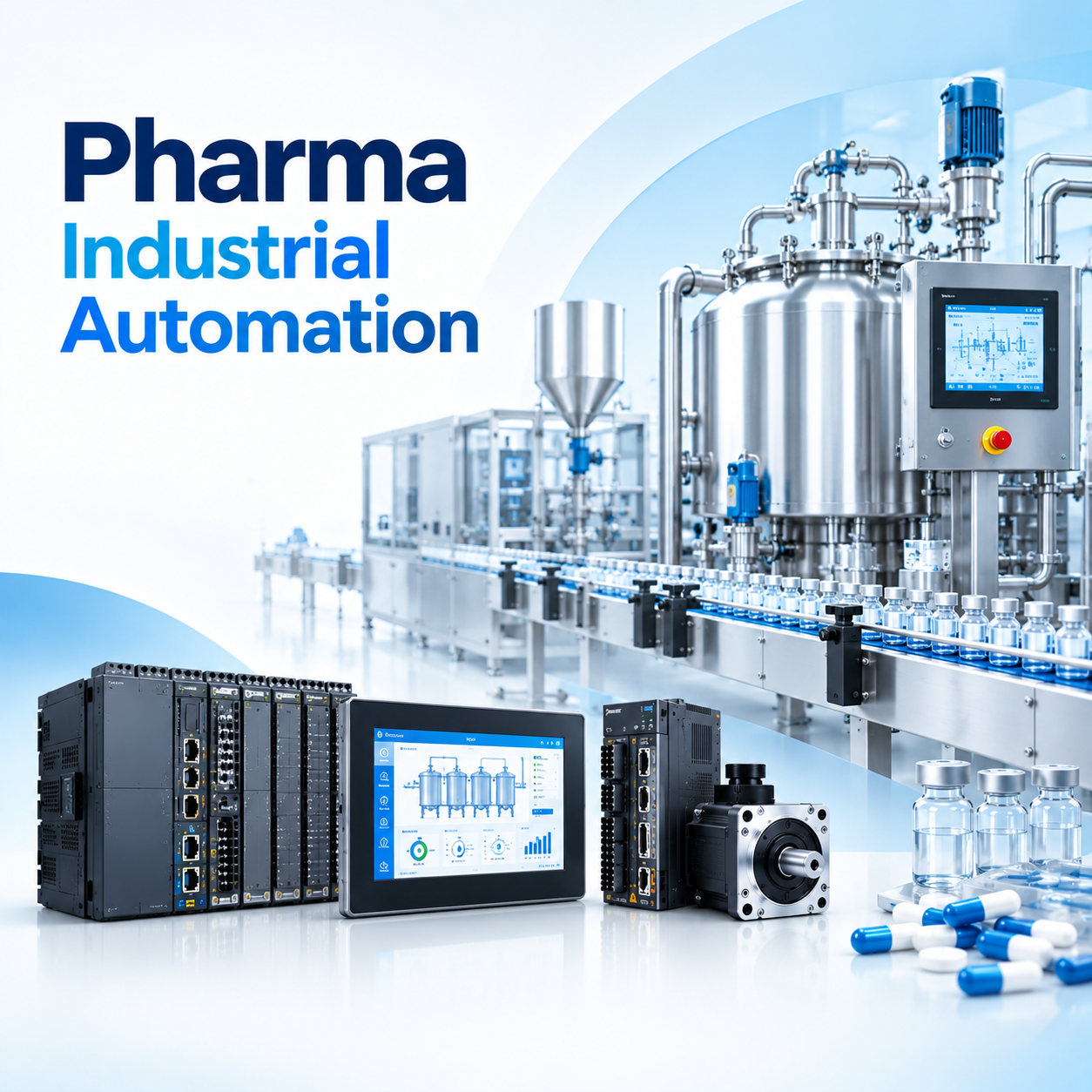 | Industrial Automation Solutions & System Integration Pharma Industrial Automation System Smart, Reliable & Scalable Automation for Pharmaceutical Manufacturing Ikodeautomation is one of the best industrial automation solution providers... View product → |
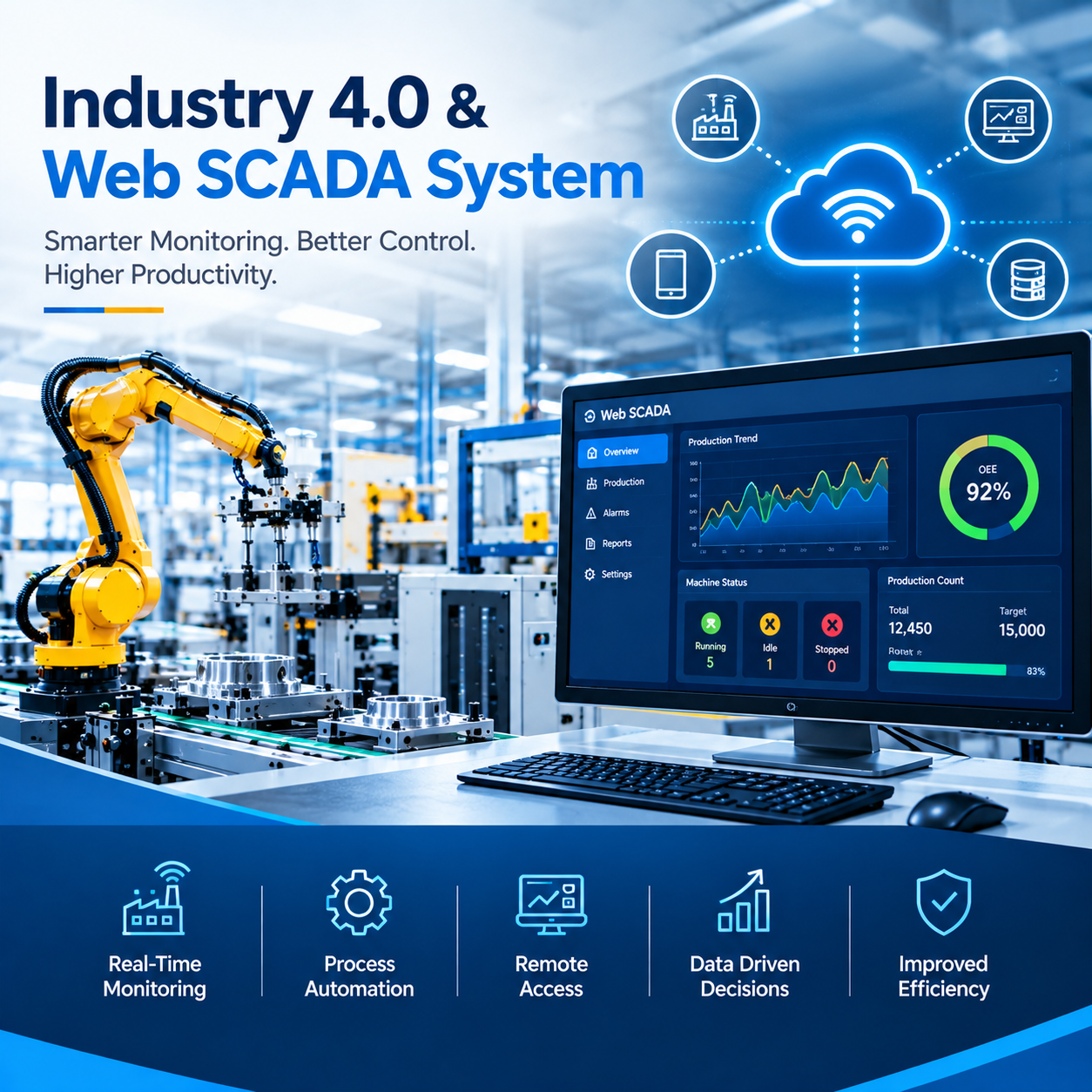 | Industrial Automation Solutions & System Integration Industry 4.0 & Web SCADA System Smart Industrial Monitoring and Web-Based SCADA Solutions Ikodeautomation provides Industry 4.0 and Web SCADA solutions for industrial automation,... View product → |
Frequently asked questions
Where does pharma SCADA create daily manufacturing value?
It brings current process values, alarm status, trend context and approved operating limits into one supervised view, helping operators respond to conditions such as temperature drift, completed autoclave phases and filling-line permissives.
Which automation layer should own each function?
The control layer should execute equipment logic and interlocks, the batch layer should manage recipes and sequencing, and SCADA should provide supervisory monitoring, alarms, trends and operator interaction without replacing safety controls.
How does a batch automation workflow control each step?
It uses an approved recipe, equipment states, permissives, phase transitions, operator prompts and recorded results to move a batch through defined steps while preventing actions that violate required conditions.
When does SCADA data become a defensible GMP record?
SCADA data needs attributable users, secure timestamps, controlled access, audit trails, reliable retention, review procedures and a validated process that demonstrates the record remains complete and unaltered.
How can brownfield equipment be integrated without losing control?
Map each existing machine’s signals, protocols, ownership and failure states before integration, then preserve local interlocks while adding supervised data exchange, alarms and defined fallback procedures.
Related product
 | Automation Training PLC Automation Training in Pune Practical Industrial Automation Course Learn PLC Automation with Practical, Industry-Oriented Training in Pune Looking for PLC Automation Training in... View product → |