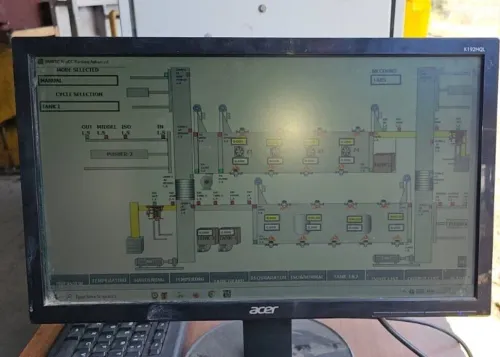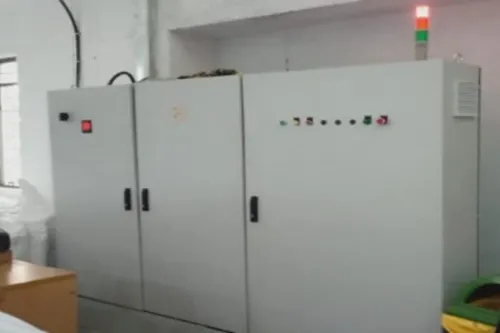

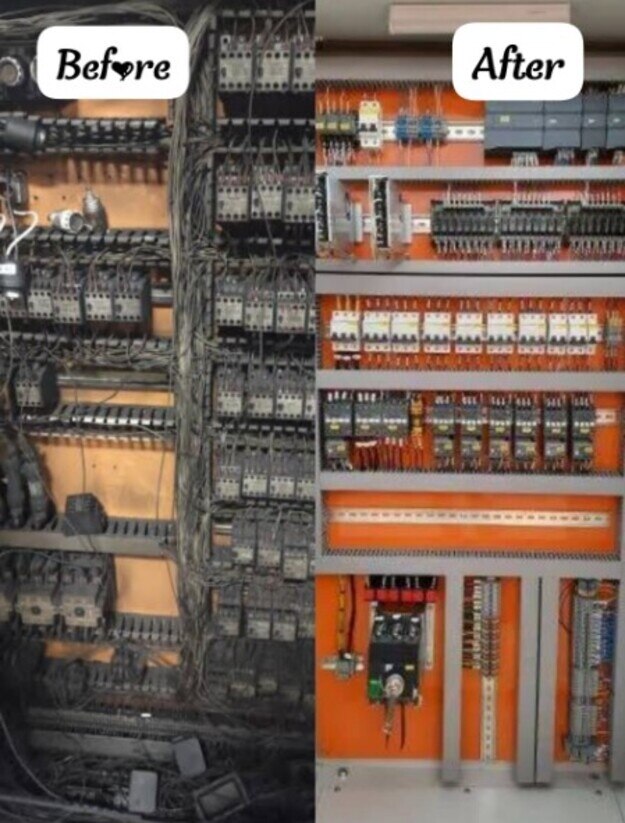
A relay panel conversion affects more than cabinet wiring: it can alter sequence timing, startup behaviour, alarms, records and the validated state of a pharmaceutical process. By the end, you will know how to assess the existing panel, choose the right conversion scope, specify validation evidence and judge whether the operational benefits justify the change.
Key takeaways
- Reverse-engineer every relay, permissive, timer, alarm and overload before rewiring.
- Replace the panel when obsolete parts threaten uptime or GMP control.
- Document PLC changes, test evidence and access controls for data integrity.
- Require approved drawings, backups, FAT results and rollback steps before cutover.
What exactly changes when relay logic becomes PLC logic?
Relay logic to PLC conversion in Dubai starts with reverse-engineering, not rewiring. Engineers collect electrical drawings, terminal schedules, wire numbers, motor lists, instrument ranges, overload settings, timer values, alarm contacts and operator procedures, then trace relay coils, contactors, timers, counters, selector switches, overload trips, alarm circuits and hardwired permissives.
1. Map each proven function to PLC inputs, outputs, software logic and operator displays. Translate normally open and normally closed contacts, seal-in circuits, cross-wired interlocks, fail-safe trips, latching alarms and power-loss recovery explicitly; test each against the cause-and-effect matrix.
2. Specify what identical I/O hides. Relay contacts propagate physically, while a PLC reads inputs and updates outputs cyclically, so define input filtering, timer resolution, simultaneous conditions, retentive memory and startup states. Otherwise a motor can start one scan later or restart when it must remain stopped.
3. Separate process interlocks from personnel protection. Emergency stops, guard circuits, pressure trips and overtemperature trips need defined safe states, restart rules and appropriate safety hardware or control architecture. Do not transfer them into ordinary PLC logic for convenience.
4. Test normal operation, faults, power loss and recovery, including first-out alarms, PLC fault response and communications loss. Record the resulting I/O list, control narrative and test evidence.
When is a relay-panel replacement the right pharmaceutical decision?
Use this decision test: replace the whole relay panel when obsolete components, undocumented modifications, extensive timer sequences, recurring faults, unavailable spares, or inadequate I/O capacity make the existing cabinet difficult to trust or expand. A clean-steam skid with these symptoms is a strong candidate for relay panel modernization.
| Option | Recommended scope | Decision trigger |
|---|---|---|
| Full panel replacement | New PLC, I/O, panel, HMI and documented sequence | Multiple faults, obsolete parts, undocumented wiring or added data and control requirements |
| Partial retrofit | Retain proven field wiring or stable utility controls; replace one sequence, add remote I/O or migrate one stage | A controlled shutdown can isolate the defined process change without disturbing validated utilities |
| Full controls architecture replacement | Replace PLC, HMI/SCADA, communications and data layer | Unreliable PLC hardware, unsupported HMI or SCADA, weak user management, missing backups, incompatible networks, or required historian, MES, batch-system or electronic-batch-record integration |
In the old skid, permissive contacts energise contactors, timers expire, and a trip latches until someone resets it. A properly designed PLC sequence exposes every state, the first-out cause, the field device blocking a start, manual-mode limits and the exact restart condition.
That difference makes an rlc plc conversion pharma project worthwhile only when the diagnostic and data gains justify new software, validation and cybersecurity controls.
Choose a partial retrofit if the field wiring is proven and utility control is stable. Choose full architecture replacement when the control platform itself cannot support reliable recovery, secure access or required GMP records.
How does conversion affect GMP validation and data integrity?
A pharmaceutical plc conversion changes the validated state when it alters a GMP process, control strategy, data flow, or computerized system that creates, modifies, stores, retrieves, or transmits GMP records. The boundary follows use, not the label PLC, SCADA, BMS, or package controller.
| System use | Validated impact | Evidence required |
|---|---|---|
| Non-GMP utility indication | No GMP impact if segregation is proven | Impact assessment and boundary record |
| GMP support system | Assess effect on quality, alarms, and records | URS, risk assessment, specifications, traceability matrix |
| GMP control or record system | Validated state changes | Change control, testing, qualification, and requalification |
Start with GAMP 5 risk-based thinking: approve the impact assessment, user requirements, functional specification, design specification, and traceability matrix before coding. Execute FAT, SAT, commissioning, qualification, and requalification under approved protocols; FAT success does not prove process qualification or continued process verification.
Follow each value from instrument to PLC tag, HMI or SCADA screen, historian, batch record, report, and archive. Check that records are attributable, legible, contemporaneous, original, accurate, complete, consistent, enduring, and available; a screen trend alone may be a display, not the original GMP record.
Under 21 CFR Part 11 and EU GMP Annex 11, define named access levels, audit trails for GMP-relevant changes, electronic signatures where used, record protection, system checks, backup and restore, business continuity, and periodic review. Document every deviation through change control and requalification when risk demands it.
What should a Dubai pharma plant require before cutover?
Before approving an rlc to plc conversion service in dubai, require a controlled cutover pack, not only a replacement panel. The plant must be able to prove what changed, which sequence was tested, and how production will recover after a fault.
1. Approve the reverse-engineered I/O list, cause-and-effect matrix, control narrative, PLC and HMI software, electrical drawings, source-code backups, version records, FAT and SAT protocols, commissioning records, and recovery procedures.
2. Specify startup permissives, PLC fault response, communications-loss behaviour, manual-mode authority, output fail states, retentive variables, time synchronisation, alarm first-out logic, and power-loss recovery. Require IEC 61131-3 conventions, readable function blocks or sequential-function logic, version-controlled source code, named access levels, network segmentation, removable-media controls, and a demonstrated backup-and-restore test.
3. Stage the migration around HVAC, cleanroom pressure, purified-water systems, compressed gases, and packaging lines. Approve every temporary bypass before use, identify its owner and expiry, and define recovery criteria such as stable pressure, acceptable water conductivity, restored gas availability, and verified line clearance.
4. Keep the GMP impact assessment, change control, traceability matrix, FAT/SAT results, deviations, commissioning records, and qualification decision together. FAT success does not prove process qualification or continued process verification.
5. In choosing IkodeAutomation |08048033508, judge its ability to document, integrate, test, and commission against the plant’s existing sequence and GMP evidence—not the PLC brand. Ask who owns the source files, approval records, rollback decision, and post-cutover support.
Related products
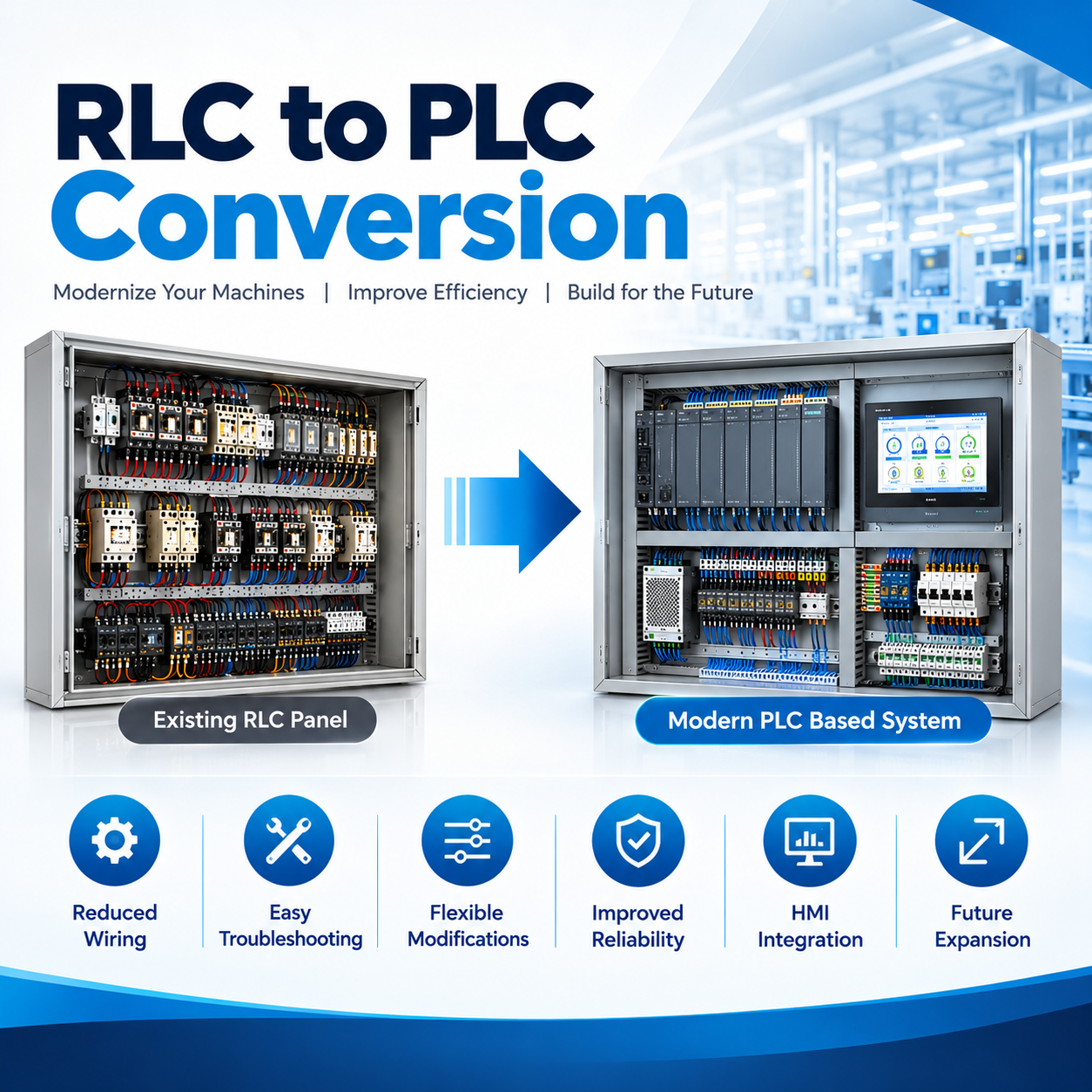 | Industrial Automation Solutions & System Integration RLC to PLC Conversion Services Upgrade Relay Logic Control to Smart PLC Automation with Ikodeautomation Ikodeautomation is one of the best RLC to PLC conversion and industrial... View product → |
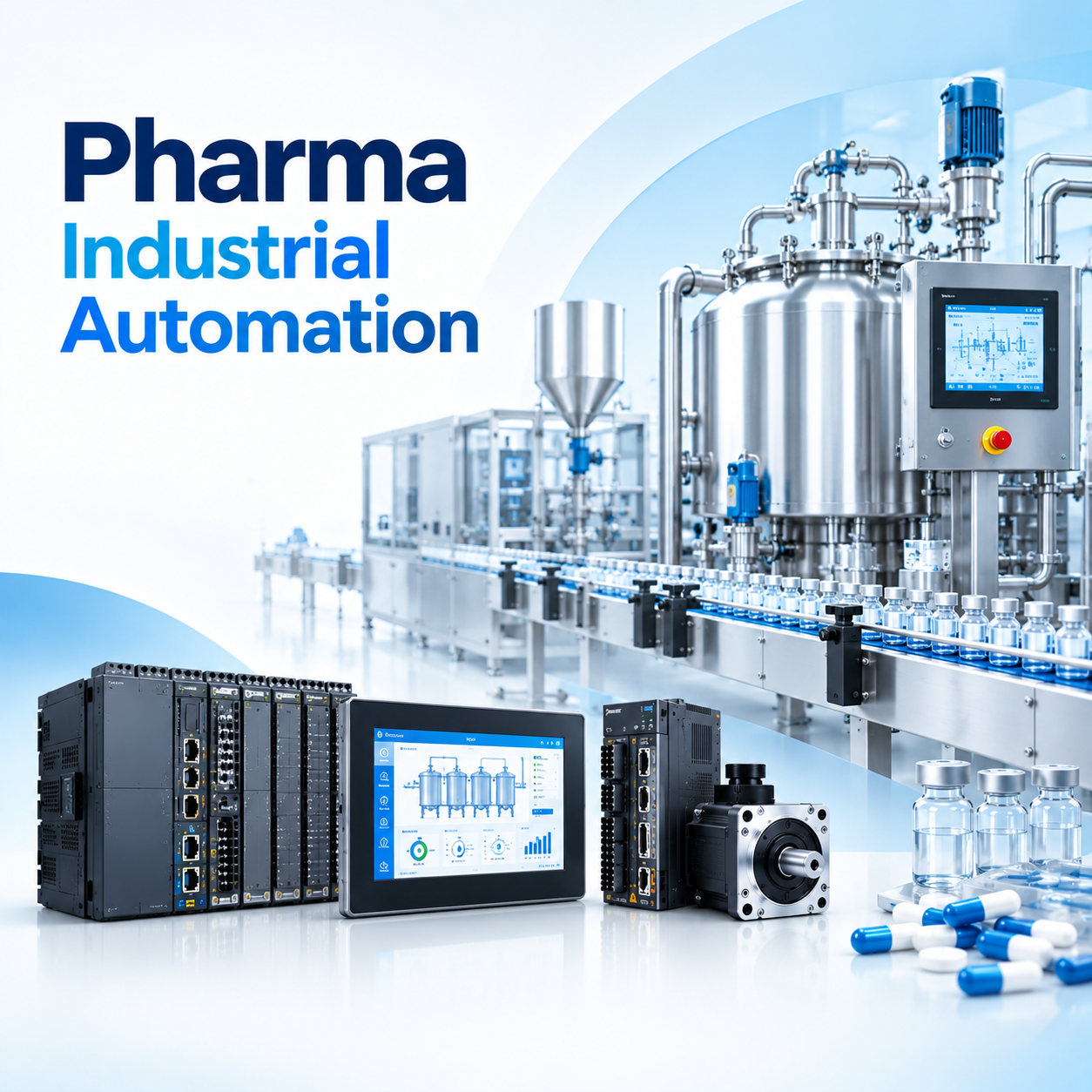 | Industrial Automation Solutions & System Integration Pharma Industrial Automation System Smart, Reliable & Scalable Automation for Pharmaceutical Manufacturing Ikodeautomation is one of the best industrial automation solution providers... View product → |
Which benefits justify the conversion after validation?
The conversion earns its cost when it reduces measurable downtime, exposes complex sequence failures, or supplies production data that relays cannot capture. A relay panel modernization is not justified merely because the cabinet is old.
| Existing condition | Benefit to measure | Leave it alone when |
|---|---|---|
| High troubleshooting time | Faster fault isolation and shorter recovery | Faults are rare and obvious |
| Complex sequences or undocumented changes | Fewer wrong starts, trips and restart delays | The panel has one static interlock |
| Need for batch data | Reliable records, trends and integration | No recipe, historian or MES requirement |
Meaningful diagnostics name the failed field device, first-out trip, active permissive and blocked start. A long list of anonymous internal bits is not a maintenance improvement.
An RLC PLC conversion pharma project adds value when validated control functions include recipe management, batch steps, alarm history, trends, historian or MES integration, electronic records and role-based operator access. Those features require approved specifications, testing and ongoing control; a PLC alone does not create compliant records.
Readable logic, centralised backups, parameter changes without rewiring and fewer undocumented wires reduce maintenance effort. They also introduce unauthorised logic edits, lost backups, corrupted databases, network outages, incorrect clocks and restore procedures that have never been tested.
Use the economic test: convert where troubleshooting time is high, sequences are complex, modifications are undocumented or production data is needed. Leave a small static interlock panel in service when software, networking, validation and cybersecurity burdens exceed the operational gain.
Frequently asked questions
What changes when relay logic becomes PLC logic?
Relay coils, contactors, timers, counters and hardwired permissives become PLC inputs, outputs and programmed logic. The conversion also changes troubleshooting, documentation and control-system access.
When is relay-panel replacement the right pharmaceutical decision?
Replacement fits when relay components are obsolete, drawings are unreliable, faults are difficult to isolate, or the panel limits alarm handling and production visibility. Reverse-engineer the existing controls before selecting the replacement scope.
How does conversion affect GMP validation and data integrity?
Treat the conversion as a controlled computerized-system change. Document requirements, approved logic, testing, user access, audit-trail needs, backups, deviations and commissioning evidence that supports GMP review.
What should a Dubai pharma plant require before cutover?
Require verified electrical drawings, terminal schedules, I/O lists, PLC backups, FAT results, approved procedures, operator training, isolation plans and a tested rollback plan before production cutover.
Which benefits justify conversion after validation?
The strongest benefits are easier fault diagnosis, clearer alarms, spare-parts availability, better production visibility, controlled recipe or sequence changes and reduced dependence on undocumented relay modifications.
Related products
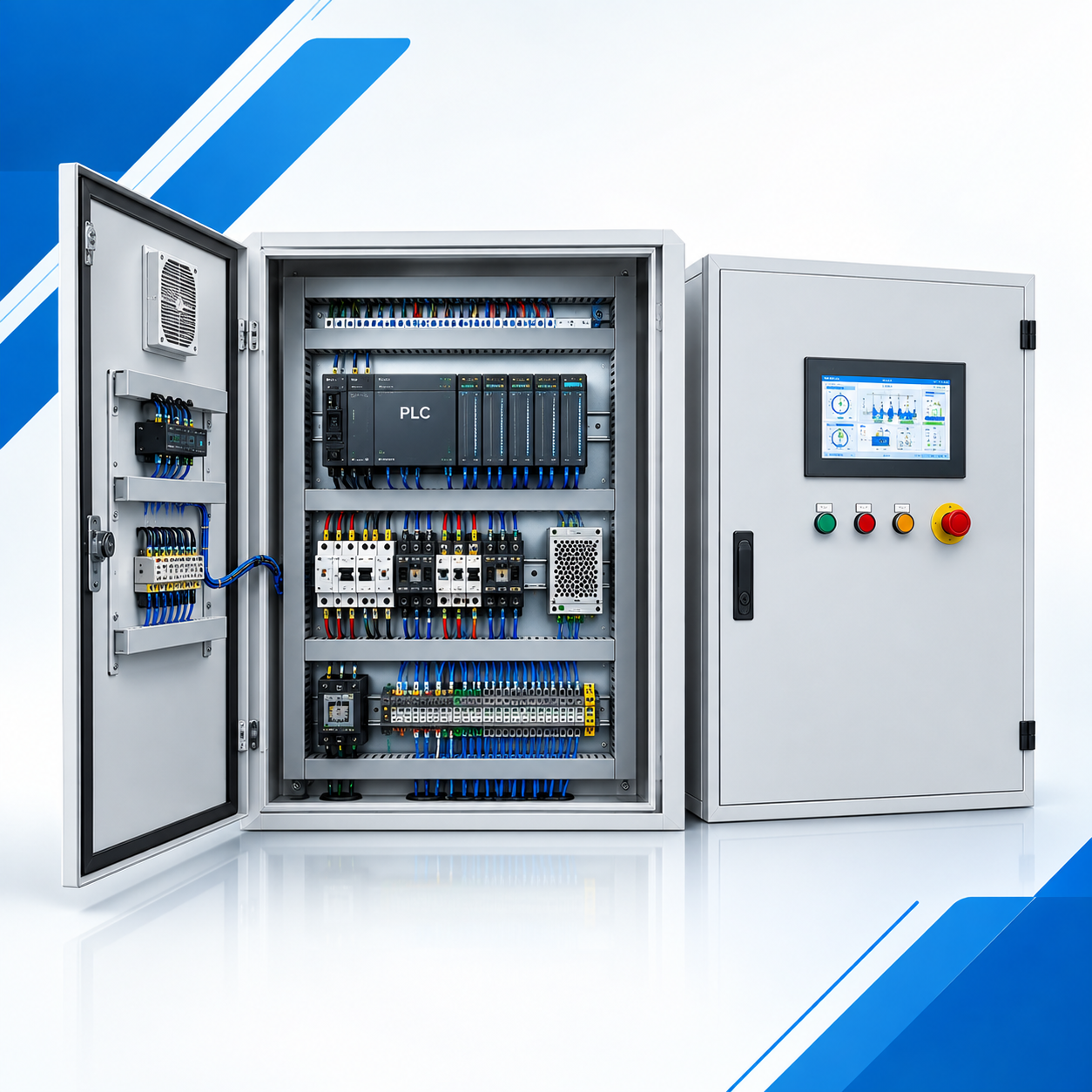 | Industrial Automation Solutions & System Integration PLC Control Panel Manufacturer & Automation Solutions Professional PLC Control Panel Design & Automation Solutions -Ikodeautomation provides professional PLC Control Panel design, manufacturing,... View product → |
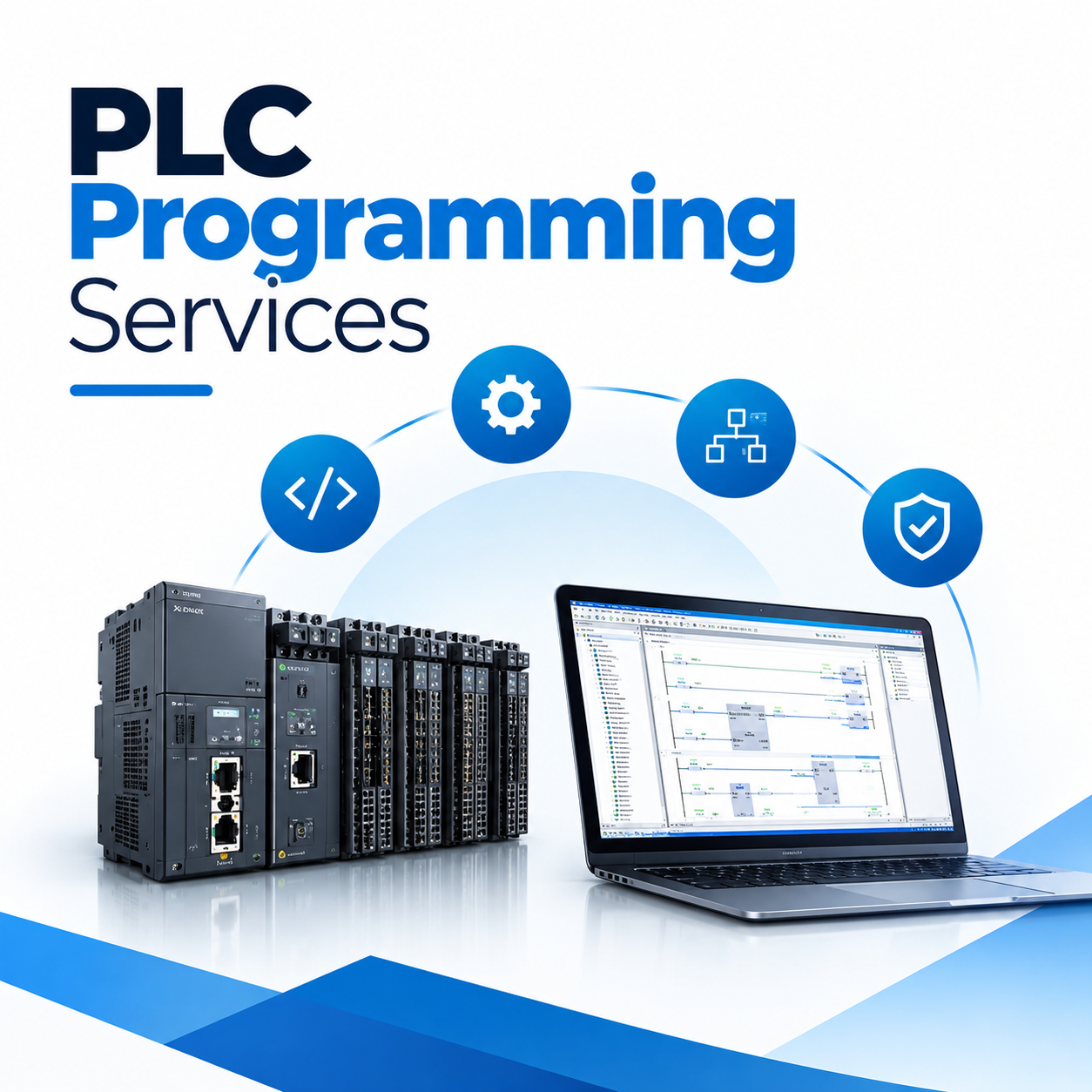 | Industrial Automation Solutions & System Integration PLC Programming Services Professional PLC Programming & Automation Solutions - Ikode Automation is one of the best PLC programming and industrial automation solution... View product → |