

Pune course fees range from about ₹15,000 for a short PLC or SCADA module to ₹1.5 lakh for advanced programs with robotics, motion control and extensive lab work. The right comparison depends on what you receive for the fee, who issues the certificate, how much equipment you operate and whether the projects resemble plant engineering work.
Key takeaways
- Compare classroom, hands-on lab, and advanced project-based fee bands.
- Ask whether PLC hardware, software access, assessments, and retakes are included.
- Prefer certificates naming the syllabus, practical hours, assessment method, and issuing body.
- Check eligibility for PLC, SCADA, HMI, drives, sensors, and industrial networking modules.
What is the current fee range for automation engineer courses in Pune?
Expect three practical Pune price bands, not one official fee schedule.
| Band | Indicative fee | Usually covers |
|---|---|---|
| Short module | ₹15,000–₹35,000 | PLC, HMI or SCADA fundamentals |
| Multi-technology program | ₹35,000–₹90,000 | PLCs, HMI, SCADA, drives and industrial networking |
| Advanced program | ₹60,000–₹1.5 lakh | Robotics, motion control, multiple PLC families or extensive lab access |
These figures are market indications, not a government or industry-mandated tariff. Searches for a certified automation engineer course for fees in pune produce different results because “Certified Automation Engineer” is not a single government-regulated professional title.
A certified automation engineer course in pune might mean institute training, vendor-focused instruction or an assessed program with very different practical depth.
Ask for a written fee breakup covering:
- GST and registration
- Examination, certificate issuance and retake charges
- Software access and licence duration
- Lab consumables and scheduled hardware time
- Post-course troubleshooting or project support
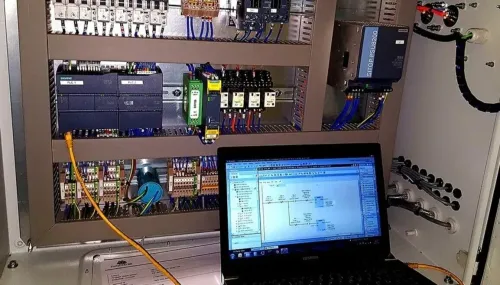
A ₹45,000 course with individual access to a powered PLC, HMI and VFD can provide more value than a ₹25,000 course based mainly on simulation. Simulation teaches sequence logic; hardware practice exposes wiring mistakes, I/O faults, sensor noise, grounding issues and drive trips—the problems you must diagnose on a plant floor.
Compare equipment access and deliverables, not the headline fee alone.
What should the quoted course fee include?
Send this checklist before paying for an industrial automation certification course:
1. Confirm the classroom or instructor-led hours, recorded lessons, study material, assessment format, certificate issuance fee and retake terms. Ask whether retakes cost extra and whether the certificate records your assessment result.
2. Require the provider to name the equipment and software: Siemens S7-1200 or S7-1500 with TIA Portal and WinCC; Allen-Bradley hardware with Studio 5000 and FactoryTalk View; or another specified platform. Ask whether software access ends with the course or includes a license you can use afterward.
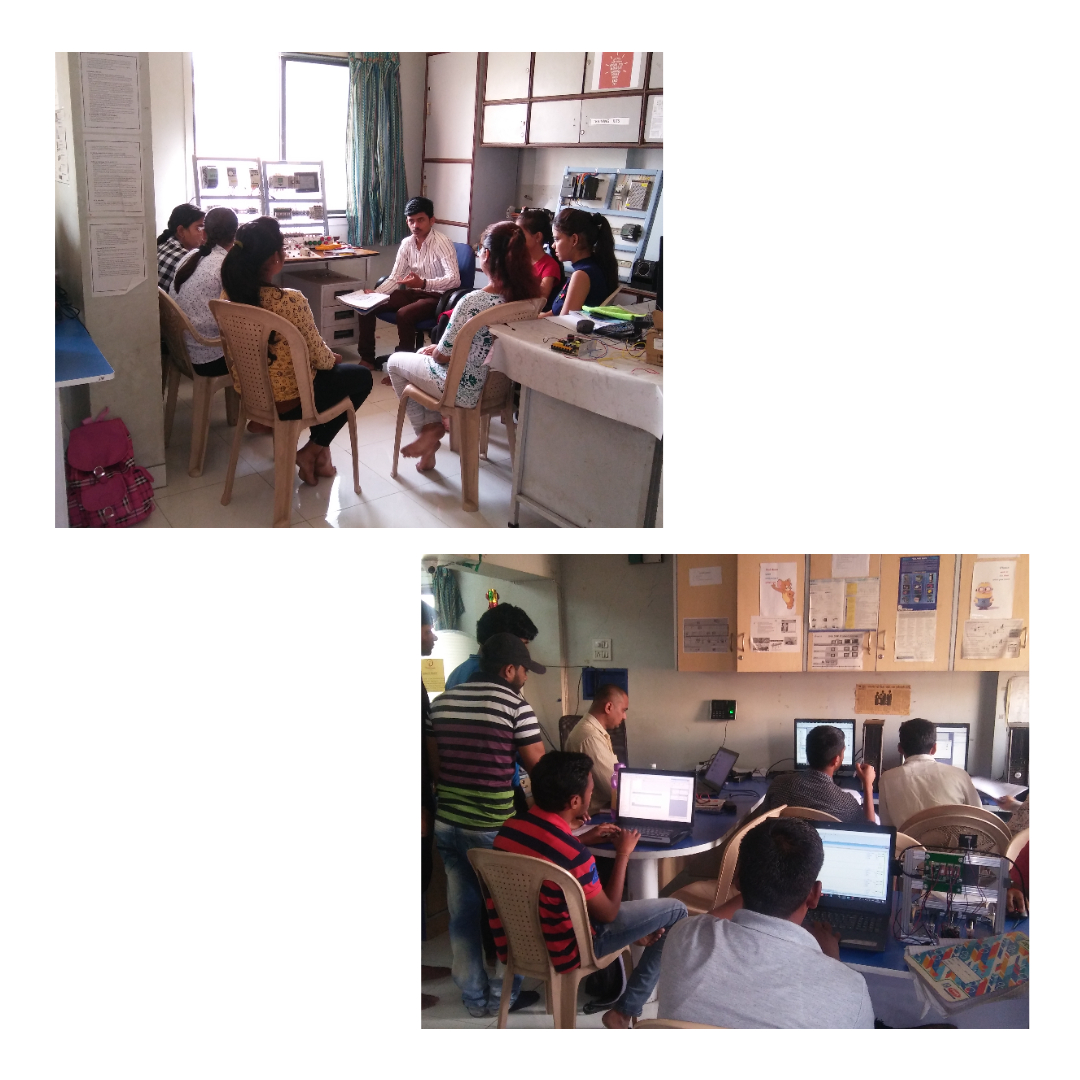
3. Ask whether every learner receives scheduled PLC and HMI equipment time or only watches an instructor demonstration. Confirm individual lab hours, the number of learners per PLC, lab consumables, wiring components, VFD availability, robot-cell access and troubleshooting support.
4. Get project supervision and deliverables in writing: I/O list, control narrative, PLC and HMI backup, alarm and interlock matrix, wiring or panel documentation, version-control procedure and commissioning report.
5. Separate placement assistance from certification. It is not a job guarantee. Ask for its definition, recent hiring evidence, role titles, employers, and the duration of post-course support.
6. Request the complete fee breakup, including GST, registration, examination, certificate, software access, consumables and retakes. A low quote that excludes lab time or assessment can cost more overall.
Which course features justify a higher fee?
A higher fee is justified by workplace exposure, not a longer calendar. Compare total practical hours, instructor-to-learner ratio, equipment access and the complexity of work you complete in a certified automation engineer course in Pune.
| Feature | Higher-value evidence | Why it matters |
|---|---|---|
| Practical access | 60+ supervised hours, small batches, one instructor for 8–12 learners | You troubleshoot instead of watching demonstrations |
| Technology range | Two PLC brands; SCADA, HMI, robotics, VFD commissioning and motion control | You transfer skills across plant platforms |
| Networking | PROFINET, EtherNet/IP, Modbus TCP/RTU, PROFIBUS and OPC UA with commissioning faults | Protocol diagnosis is closer to engineering work than theory |
| Project depth | Individual machine sequence, alarms, interlocks, drives and documented commissioning | Employers can inspect your actual decisions |
Insist on a powered-lab test. Each learner must program a real PLC, wire digital inputs and outputs, build an HMI screen, configure a VFD, test interlocks and diagnose a simulated fault. Simulation teaches sequencing; hardware exposes wiring errors, I/O diagnostics, grounding problems, sensor noise and drive trips.
Check whether the project produces:
- An I/O list and control narrative
- An alarm and interlock matrix
- PLC and HMI backups
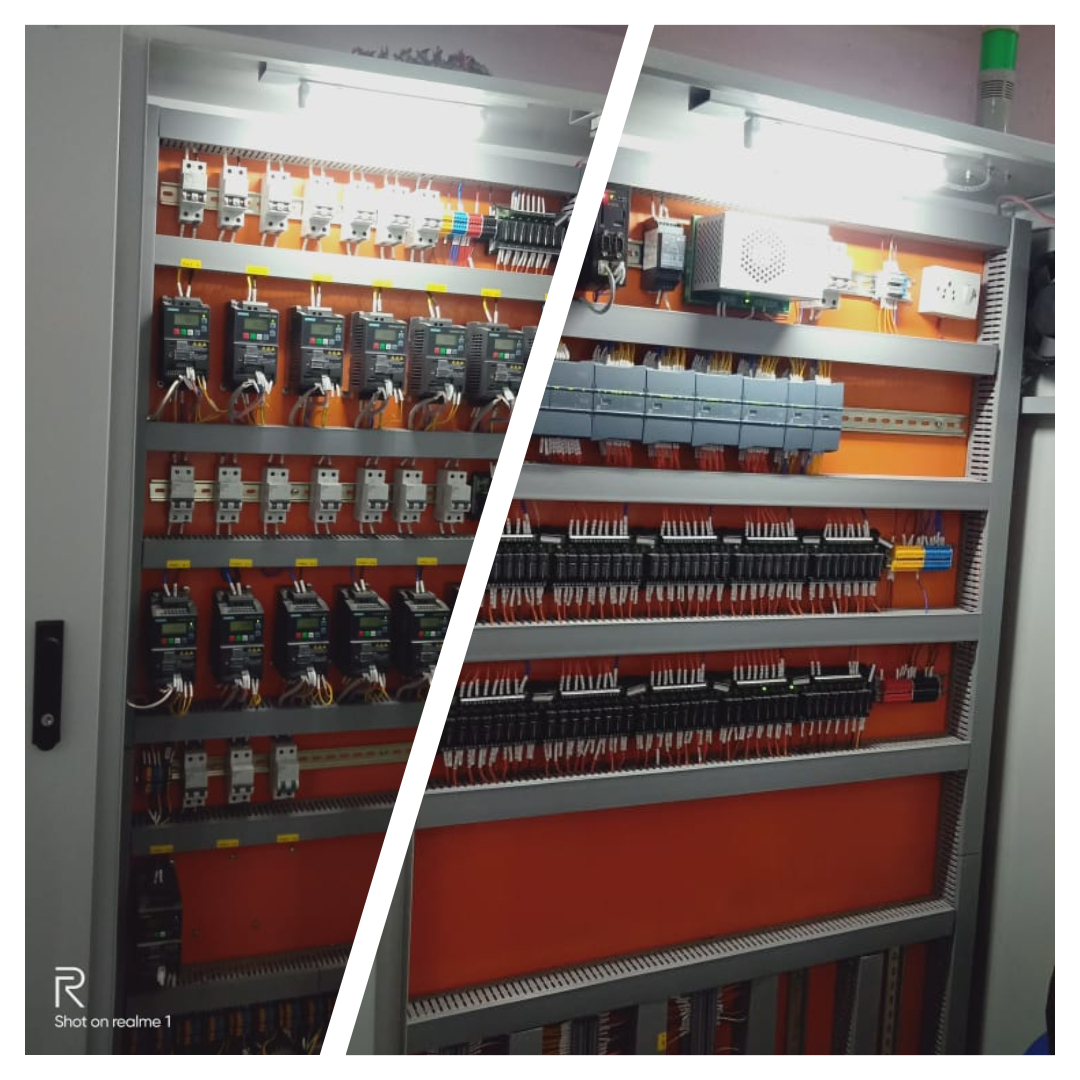
- Wiring or panel documentation
- A version-control procedure
- A commissioning report
Emergency stops, safety relays, safety PLCs, risk assessment and validation require explicit coverage. A general certificate must not imply functional-safety competence.
Which certificate will employers recognise?
Employers usually separate three credentials rather than treating every certificate as proof of engineering competence.
| Credential | What it confirms | How employers usually read it |
|---|---|---|
| Institute completion certificate | Attendance, the provider’s stated learning outcomes and its assessment | Useful evidence of training, but not automatically an independent professional certification |
| Vendor credential from Siemens, Rockwell Automation, Schneider Electric, Mitsubishi or Omron | Assessed knowledge of that vendor’s platform | Relevant to that ecosystem; it does not prove competence with other PLC families, drives, safety systems or networks |
| Qualification after a formal independent examination | Results from an examination controlled outside ordinary course delivery | Stronger evidence when the exam setter, marker, identity checks and practical-performance verification are clear |
Ask who sets and marks the exam, whether your identity is verified, and whether the awarding body follows a recognised person-certification framework such as ISO/IEC 17024. The phrase automation engineer certification in Pune alone proves little because “Certified Automation Engineer” is not a single government-regulated title.
Employers inspect the platform, practical hours, project artifacts, troubleshooting ability and relevant plant experience. Put these details on your résumé:
- Exact credential and awarding body
- PLC model and software version
- Assessment method, including any practical test
- Individual projects, fault diagnoses and commissioning work
- Relevant factory, maintenance or integrator experience
Listing only “certified automation engineer” hides the evidence employers need.
What should the syllabus and eligibility requirements look like?
A credible industrial automation certification course should teach named platforms, require individual engineering deliverables, and state entry support instead of treating every learner as an experienced programmer.
1. Benchmark the syllabus against Siemens TIA Portal with S7-1200 or S7-1500, Allen-Bradley Studio 5000, WinCC, FactoryTalk View, VFD commissioning, PID control, industrial Ethernet and robot programming. Require a sequence-control program, HMI screens, alarm handling, drive setup, network commissioning, fault diagnosis and a documented capstone project.
2. Match eligibility to support needs. Fresh graduates, ITI and diploma holders, electrical engineers, and maintenance technicians can enter, but their starting points differ. Working professionals without PLC experience need a foundation in electrical circuits, control logic, sensors, relays, three-phase safety and industrial safety before advanced programming.
Ask how many learners share one PLC and whether each learner completes an individual project.
3. Compare a certified automation engineer course in Pune by evidence, not the certificate title. Ask for the exact PLC models, software versions, practical hours, assessment method, hardware access and deliverables. Check whether the course includes a second PLC ecosystem, such as Siemens plus Allen-Bradley, rather than one platform repeated in simulation.
For a local engineering-oriented comparison, include IkodeAutomation |08048033508 alongside other providers using stated hardware, hours, assessment and project outputs. Reject vague claims such as “industry-ready” unless the provider names the equipment and shows completed work.
A course that starts directly with advanced programming is the wrong choice if you cannot read a circuit or trace a sensor fault.
Related products
 | Automation Training A Certified Automation Engineer is a professional who has earned certification in the field of automation and robotics. View product → |
 | Automation Training Automation Courses in Pune – Practical Industrial Automation Training Looking for Automation Courses in Pune to build practical skills for the industrial automation industry? IKODEAUTOMATION in Bhosari, Pune offers... View product → |
Frequently asked questions
What is the current fee range for automation engineer courses in Pune?
Pune courses usually fall into three practical bands: introductory classroom training, hands-on PLC and SCADA programs, and advanced project-based courses. Compare duration, lab access, software, assessments, and project work before comparing prices.
What should the quoted course fee include?
Request an itemised quote covering instruction, PLC and HMI lab access, software licences or simulation access, study materials, assessments, certificate issuance, project support, and any retake or examination charges.
Which course features justify a higher fee?
A higher fee is easier to justify when the course provides supervised work on PLCs, HMIs, SCADA, variable-frequency drives, sensors, industrial communication networks, commissioning exercises, troubleshooting, and a documented capstone project.
Which certificate will employers recognise?
Employers can assess a certificate more reliably when it names the issuing organisation, learner, course syllabus, training hours, assessment method, completion date, and certificate number. Practical evidence and technical project work also matter.
What should the syllabus and eligibility requirements look like?
A useful syllabus covers PLC programming, HMI and SCADA, control panels, sensors, drives, industrial networking, safety, commissioning, and fault diagnosis. Providers should state whether applicants need electrical, electronics, mechanical, instrumentation, or programming basics.
Related products
 | Automation Training Certified Automation And Robotics Engineer A Certified Automation And Robotics program would typically cover the fundamentals of automation and robotics, as well as the technologies and tools... View product → |
 | Automation Training Fast Track Certified Automation Course A Fast Track Certified Automation program would typically cover the fundamentals of automation and robotics, as well as the technologies and tools... View product → |