

A fast-track course is not defined by its name: you need to verify the calendar, supervised lab hours, platform versions, assessment rules and certificate issuer before enrolling. By the end, you will be able to compare course processes, identify missing evidence and ask whether the training matches your intended automation role.
Key takeaways
- Demand written contact hours, lab hours, attendance rules and assessment methods.
- Check that the syllabus names PLC brands, software versions and hands-on lab tasks.
- Separate provider-issued certificates from manufacturer credentials and regulated qualifications.
- Confirm trainer experience, lab access, retake rules and certificate verification details.
What Does Fast-Track Automation Training in Pune Actually Include?
A genuinely accelerated course is defined by contact hours and practical output, not by a short calendar label. Fast track automation training in pune is not a regulated qualification category, so the provider must state the timetable, PLC platform, laboratory hours, attendance rule and assessment method in writing.
Use this checklist before enrolment:
- Course duration: record the start and finish dates, then calculate the total instructor-led hours rather than accepting “four weeks” as proof of speed.
- Weekly load: separate classroom teaching, supervised wiring, simulator practice and unsupervised study. A course offering 20 lab hours and 20 self-study hours is not equivalent to 40 supervised lab hours.
- Attendance: ask for the minimum percentage, permitted absence, make-up process and whether missed lab tasks block assessment. Skipping commissioning practice leaves gaps that a later attendance certificate cannot repair.
- Enrolment screening: confirm the entry test or interview, required electrical and programming knowledge, batch size and learner-to-panel ratio. A mixed class with no screening slows advanced learners and overwhelms beginners.
The schedule should move through a documented sequence: I/O identification, ladder-logic programming, PLC download, HMI tags, motor or drive control, alarms, fault injection and recovery. If you only watch demonstrations, the course is compressed instruction, not accelerated practical training.
Ask whether the final certificate records attendance and an assessment result. A provider-issued completion certificate is evidence of training; it is not automatically an OEM credential or an independently assessed qualification.
Which Platforms, Modules and Lab Tasks Should the Syllabus Cover?
A complete accelerated syllabus must name the hardware, software versions and laboratory hours, not just say “PLC and SCADA.” If you searched for fast track certified automation for course in pune, check that the intended offering identifies its credential as provider-issued, OEM-issued or independently assessed.
| Platform | Technical coverage | Practical evidence |
|---|---|---|
| Siemens S7-1200 or S7-1500 | TIA Portal, ladder logic, function blocks and WinCC HMI | Download a working sequence and diagnose an I/O fault |
| Allen-Bradley CompactLogix | Studio 5000, tags, ladder routines and FactoryTalk | Build a motor-control routine and verify alarms |
| Mitsubishi or Schneider | Vendor programming environment, I/O mapping and communications | Commission a small machine cycle on hardware or simulator |
| SCADA and networking | Tags, trends, alarms, Ethernet/IP, Profinet or Modbus TCP | Exchange data between PLC, HMI and SCADA |
Expect the laboratory sequence to follow the production task rather than isolated demonstrations:
- Wire sensors, pushbuttons, actuators and safety circuits; map every I/O point.
- Create ladder or function-block logic, download it to the PLC and test normal operation.
- Configure HMI tags, screens, start-stop controls, trends and alarm acknowledgement.
- Add VFD motor-start logic, then cover servo positioning if the equipment supports it.
- Inject sensor, communication and drive faults; find the cause and recover safely.
- Complete at least one independently commissioned project, with a documented test sheet.
Robotics, industrial sensors, safety relays and machine networking belong in the syllabus when the provider has the equipment. Confirm that supervised wiring and fault-finding count as instructor-led lab time, not simulator access alone. The certificate should show the issuer, dates, assessment result, credential number and verification method.
How Does the Assessment and Certification Process Work?
A credible certified automation course in Pune should leave an auditable trail from entry screening to certificate issue. Do not accept a logo alone: the certificate must identify who assessed you, what you completed and how another person can verify it.
1. Complete an enrolment diagnostic before payment. It should test relay logic, three-phase motor control, sensors, 4–20 mA signals, electrical drawings and one basic PLC programming task. The result should place you in the course or identify prerequisite training.
2. Confirm the assessment plan in writing. Ask for the attendance threshold, practical tasks, examination format, pass mark, retest rule and certificate issuer. “Fast track” describes the schedule, not a regulated qualification.
3. Complete an individual practical evaluation on the stated platform. You should implement an interlock, scale a 4–20 mA input, create an HMI alarm, diagnose an I/O fault and submit the PLC project with a test record. A multiple-choice quiz alone cannot prove commissioning or fault-finding ability.
4. Sit the final examination after the lab assessment. It should test sequence logic, safety circuits, troubleshooting, HMI or SCADA behaviour and basic industrial networking, rather than recall of software menus.
5. Receive the certificate only after the provider records your result and attendance. Check that it shows your full name, course dates, assessment result, credential or serial number, issuing organisation and a working verification method.
If the issuer is a training centre, the document proves that centre’s assessment; it is not automatically a Siemens, Rockwell Automation or independently recognised qualification.
How Can You Tell Which Automation Credential You Are Receiving?
A certificate of completion proves that a provider recorded your participation; it does not prove competence in commissioning, safety circuits, or fault diagnosis. Ask who assessed you, whether you completed an individual practical test, and whether the document carries a credential number and verification method.
| Credential type | What the document should identify | What it proves |
|---|---|---|
| Training-centre certificate | The centre’s legal name, course dates, attendance or result, syllabus, certificate number and contact for verification | You completed that provider’s programme and any stated assessment |
| Siemens or Rockwell Automation credential | The named OEM, specific platform or examination, candidate identity, issue date, credential ID and OEM verification page | You passed an assessment controlled or recognised by that platform owner |
| Independently recognised qualification | The awarding or assessing organisation, qualification title, assessment rules, level or framework reference, result and public verification route | An external body assessed the defined learning outcomes |
Treat a logo or “international certificate” claim as weak evidence if it has no issuer, serial number or lookup process. IEC 61131-3 names programming languages such as Ladder Diagram, Function Block Diagram and Structured Text; it does not certify individual trainees.
Before paying for industrial automation certification in Pune, request a sample certificate and test the verification link. Confirm whether the fast-track certified automation course in Pune issues a provider certificate, an OEM credential, or an independently assessed qualification. Those labels are not interchangeable.
What Should You Confirm Before Choosing a Pune Training Provider?
Choose the provider that can show you its lab, schedule, assessment method and certificate evidence—not one that only promises a credential. Treat fast track automation training in Pune as an accelerated schedule, not a regulated qualification.
| Question | Strong answer | Warning sign |
|---|---|---|
| Equipment and access | Names the PLC, HMI, SCADA, VFD and networking hardware; gives supervised lab hours and panel-to-learner ratio | Demonstrations or simulator access only |
| Batch size | States the maximum learners and confirms individual wiring, downloads and fault-finding time | “Small batch” without a number |
| Projects | Each learner completes I/O mapping, HMI tags, motor logic, alarms, fault injection and recovery | One group project or copied exercises |
| Fees | Separates tuition, software, lab access, exam, retakes and taxes in writing | “All-inclusive” with no itemised fee |
| Outcomes | Uses a practical rubric for commissioning, safety circuits and diagnosis; explains placement or interview support without guaranteeing a job | Attendance treated as proof of competence |
| Credential | Shows issuer, dates, result, serial number and online verification method | Logo or “international certificate” without verification |
Ask whether missed lab hours can be recovered; a fast schedule loses value when you cannot practise. For a certified automation course in Pune, confirm whether the certificate is provider-issued, OEM-issued or independently assessed. A provider such as IkodeAutomation |08048033508 should answer these questions with documents, not verbal assurances.
Related product
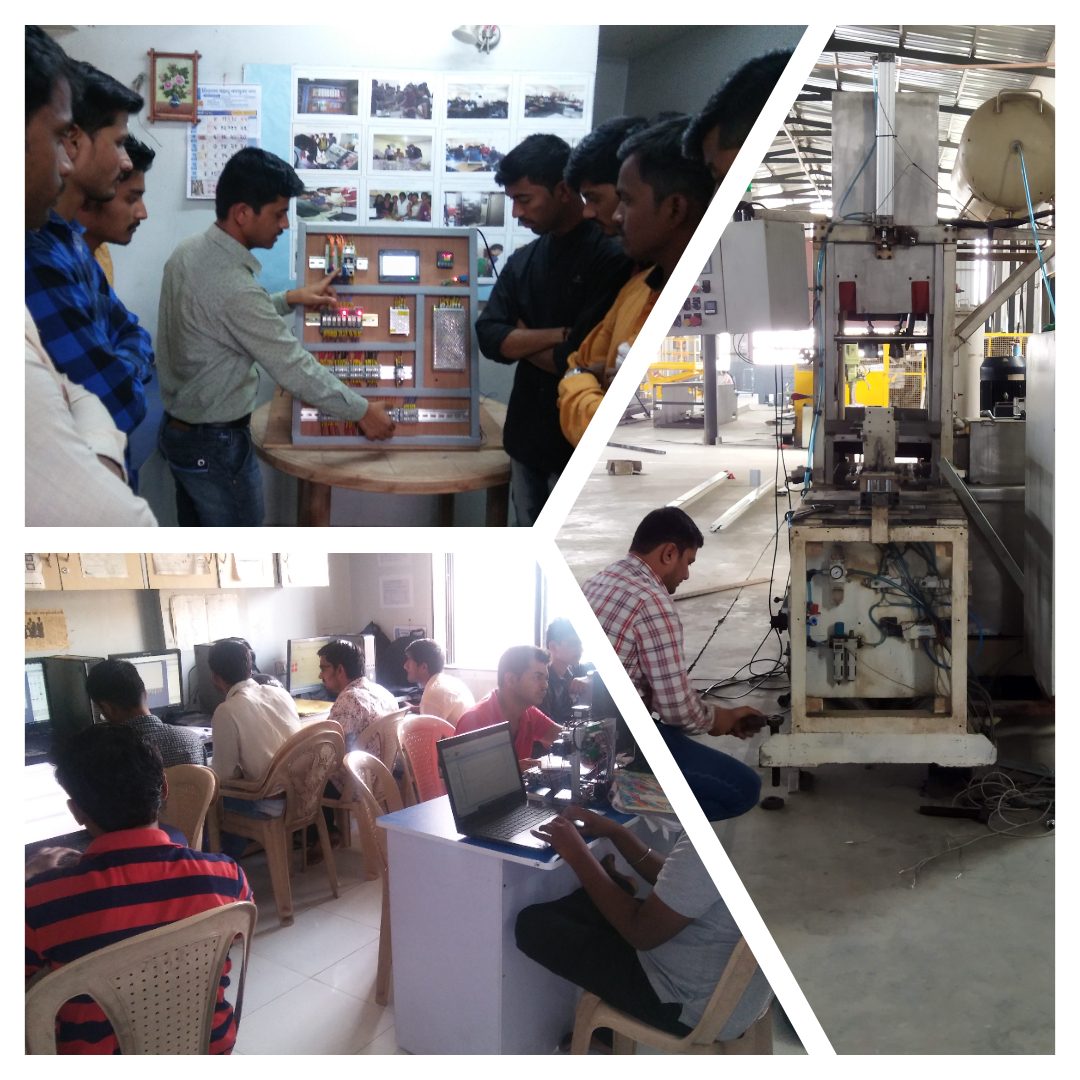 | Automation Training Fast Track Certified Automation Course A Fast Track Certified Automation program would typically cover the fundamentals of automation and robotics, as well as the technologies and tools... View product → |
Frequently asked questions
What does fast-track automation training in Pune include?
A credible course specifies contact hours, laboratory hours, timetable, PLC platform, attendance requirements and assessment method in writing.
Which platforms and lab tasks should an automation syllabus cover?
Look for named PLC platforms, programming software, HMI or SCADA modules, industrial networking and practical tasks such as wiring, commissioning and fault diagnosis.
How does the assessment and certification process work?
The provider should explain attendance thresholds, practical and written assessments, pass criteria, retake rules and when the certificate is issued.
How can you identify the automation credential you are receiving?
Check whether the certificate is issued by the training provider, an equipment manufacturer or another recognised body, and ask how employers can verify it.
What should you confirm before choosing a Pune automation training provider?
Confirm the trainer’s experience, equipment access, batch size, software versions, total fees, practical hours, assessment rules and certificate details.