
Connected production systems can provide broader operational visibility, but the value of industrial data depends on whether it answers a genuine manufacturing or maintenance requirement.
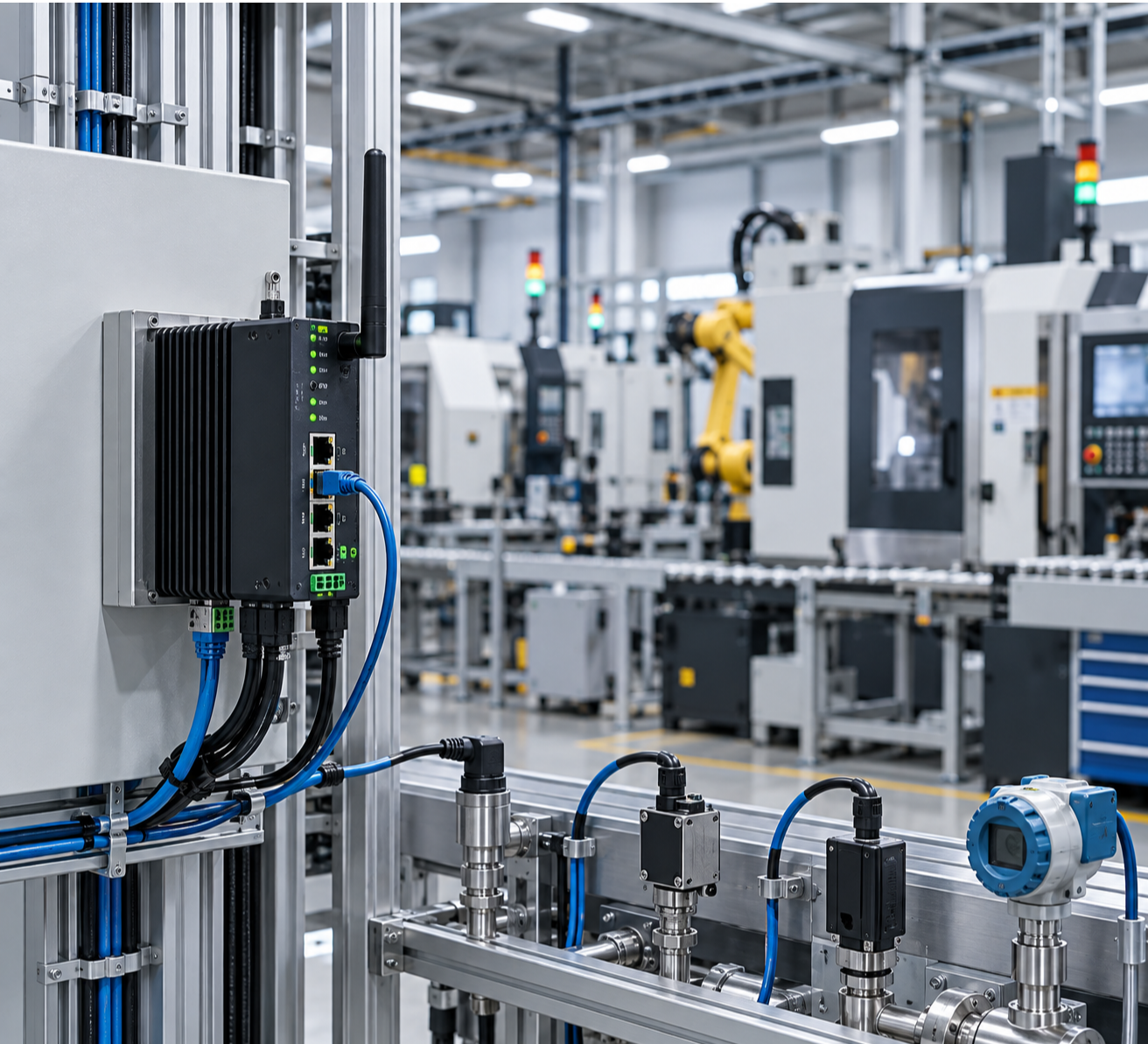
Industrial IoT connects equipment, sensors, controllers and data platforms so selected shop-floor information can be collected for monitoring and analysis.
An effective implementation starts with defining the intended use of the data. A manufacturer may want to understand machine availability, production cycles, equipment conditions or selected process parameters. These objectives determine which signals should be collected.
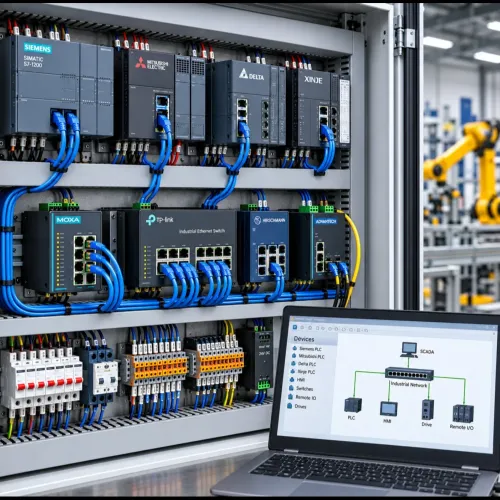
IIoT can often complement existing automation rather than replace it. A Siemens, Delta, Mitsubishi or Xinje controller may continue managing real-time machine functions while relevant information is transferred to a separate monitoring or data environment, subject to technical compatibility.
Data quality deserves careful attention. Incorrect tags, inconsistent naming or incomplete machine information can reduce the usefulness of dashboards and analysis.
The communication architecture should also be planned with the operational environment in mind. Connecting shop-floor systems to broader networks introduces additional considerations around access, reliability and system boundaries.
A phased implementation can make evaluation easier. Organizations may begin with selected machines, identify useful information and determine how the data supports decisions before expanding connectivity.
This approach helps prevent IIoT projects from becoming data-collection exercises without a defined operational purpose.
For manufacturers exploring connected production capabilities, IkodeAutomation can discuss Industrial IoT in Pune based on existing automation systems, data objectives and integration considerations.