
A machine concept becomes buyable only when cycle time, sequence, safety, interfaces, documentation and acceptance criteria are written down. By the end, you will have a practical requirement structure for comparing automation approaches, assigning responsibilities and testing a machine before production handover.
Key takeaways
- Set cycle time, availability, reject rate and operating limits before requesting proposals.
- Choose PLC, motion, robot or vision architecture from the process—not vendor preference.
- Specify safety circuits, utilities, interfaces, data ownership and site conditions in writing.
- Make FAT, SAT, spare parts, documentation and response times contractual deliverables.
Convert the machine concept into measurable requirements
Before requesting a proposal for machine automation in Pune, define the machine’s measurable output, operating limits and acceptance evidence. “Automate assembly” is not a requirement; “complete one part every 18 seconds at 95% availability, with fewer than 0.5% rejects” is.
1. Record the process targets: takt time, cycle time, production volume, machine sequence, loading and unloading method, part presentation, changeover time, uptime target, operator interventions, reject handling and recovery after a fault.
2. Describe each operation in a sequence-of-operation document. State sensor conditions, actuator movements, interlocks, inspection decisions, recipe changes and the required response to a missing, damaged or incorrectly oriented part.
3. Issue a functional requirement specification with an I/O list, product drawings and tolerances, layout and floor-space limits, operating modes, HMI requirements, traceability fields and acceptance-test criteria. Require the proposal to identify whether the task needs manual assembly, modular equipment, robotics, servo motion, pneumatic actuation or hydraulics.
4. Define the design evidence: ISO 12100 risk assessment, safeguarding and residual-risk register, electrical drawings, pneumatic circuit, network architecture and FAT and SAT procedures. Name owners for mechanical design, controls, safety validation, installation, commissioning, training and production support.
State the supply voltage variation, short-circuit withstand rating, earthing arrangement, control voltage, panel cooling, enclosure IP rating and ambient temperature before component selection. Also require editable PLC, HMI, drive and safety files, software licences, passwords, tested backups, commissioning spares and an obsolescence plan.
Choose the right automation architecture for the process
Choose manual assembly for low volumes, frequent product changes or an operation that is cheaper to staff than to automate. Choose modular automation when you need repeatable stations that can expand with demand.
SPM automation fits stable, high-volume products with fixed tooling and short cycle targets; robots fit variable loading, orientation, welding or handling where reprogramming matters more than maximum speed.
| Option | Best fit | Main trade-off |
|---|---|---|
| Manual assembly | Low volume, high variation | Labour dependence and inconsistent cycle time |
| Modular automation | Medium volume and staged investment | More interfaces between modules |
| SPM automation | High volume, fixed sequence | Expensive changeover when the product changes |
| Robot cell | Variable parts, flexible handling | Integration, guarding and programming effort |
| PLC control | Sequencing, interlocks and machine logic | Not a substitute for precision positioning |
| Motion system | Servo positioning, cam profiles and synchronised axes | Higher tuning and commissioning effort |
| Pneumatic equipment | Fast clamping, pushing and simple strokes | Air consumption and limited force control |
| Hydraulic equipment | High force, pressing and forming | Leaks, maintenance and slower cleanliness response |
Use a PLC for sequence control, then add servo motion when position, speed or force must be controlled accurately. Select pneumatics for simple binary movement; select hydraulics for substantial force. Do not install a robot where a dedicated mechanism meets takt time at lower cost.
For industrial machine automation in Pune, require the architecture proposal to show cycle-time calculations, changeover steps, operator tasks, reject handling and floor-space use. Tie each choice to a documented maintenance plan, spare strategy and complete handover package, including PLC/HMI backups, drawings, schematics and training records.
Specify safety, electrical, pneumatic and site conditions
Freeze these conditions before selecting a PLC, drive, sensor or robot. A nominal 415 V, three-phase supply does not define voltage variation, phase loss, harmonics or available short-circuit current. The specification must also state earthing arrangement, 24 VDC control voltage, panel cooling, enclosure IP rating and permissible ambient temperature.
- Record floor loading, machine footprint, anchoring points, maintenance clearances, lifting access, lighting, dust, oil mist, vibration and ambient temperature. Confirm the location of operator stations, material flow and network connection.
- Define the plant electrical supply, voltage tolerance, frequency, short-circuit withstand rating, protective-device coordination and PE bonding. State whether the panel needs an air conditioner, fan-filter unit or heat exchanger.
- State compressed-air pressure and permitted variation, flow, quality, dew point, filtration, isolation and drain points. Size actuators for the actual load, and add pressure switches so low air pressure creates a controlled stop rather than defective parts.
- Apply ISO 12100 risk assessment: identify crushing, shearing, trapping, stored-energy and unexpected-start hazards. Specify fixed guards, interlocked gates, light curtains, two-hand controls, emergency stops, lockout points and safety validation evidence; an emergency-stop button alone is not a safeguarding strategy.
| Requirement area | Specify before design | Failure if omitted |
|---|---|---|
| Electrical | Supply limits, earthing, IP rating, cooling and short-circuit rating | Nuisance trips, overheating or unsafe fault current |
| Pneumatic | Pressure, flow, air quality and isolation points | Slow cycles, sticking valves and rejected parts |
| Site | Floor, access, environment and service clearances | Installation delays and unmaintainable equipment |
| Safety | Hazards, safeguards, residual risks and validation owner | Uncontrolled access and incomplete compliance |
These details belong in the purchase specification for machine automation systems in Pune, with named owners for mechanical, electrical, controls, installation and safety work.
Define controls, interfaces, data and ownership
Put the OEM in control of the automation stack by specifying ownership before placing the order. Name the PLC, HMI, servo, safety controller, drives, industrial network and engineering software, including approved versions and licence terms. A machine automation integrator in pune must identify which party owns each interface, program, password and future modification.
Require these handover items as contractual deliverables:
- Editable PLC, HMI, robot, drive, safety-controller and SCADA source files
- Software versions, licences, passwords, restore instructions and a tested backup
- As-built electrical drawings, I/O lists, network topology and pneumatic schematics
- Safety-circuit documentation, calibration records, manuals and maintenance schedules
- Operator and maintenance training records
Do not accept compiled or password-protected applications as the final package. Without editable files, a fault reset or product change can require the original supplier and extend downtime.
Define the data interface rather than writing “OPC UA compatible.” Specify tag names, units, timestamps, quality codes, events, namespace ownership, authentication and behaviour after network loss.
For a multi-machine line, assign ownership of handshakes, permissives, product tracking, buffer logic, fault propagation, restart states and line clearance; otherwise individually successful machines can deadlock when material remains between stations.
Separate mechanical design, electrical design, controls software, safety validation, installation, commissioning, training and production support into named responsibilities with acceptance criteria. This prevents “complete automation” from becoming an undefined scope that creates change orders and supplier dependence.
Make FAT, SAT and lifecycle support part of the purchase
Do not award a machine automation contract on the lowest project price. Compare each integrator’s evidence, acceptance method and ownership terms before signing.
| Integrator basis | What to compare | Evidence to demand |
|---|---|---|
| Scope control | Named responsibility for mechanical design, controls, safety validation, installation, training and production support | Responsibility matrix and acceptance criteria |
| FAT capability | Ability to test the complete sequence, faults, changeover and interfaces | Recorded test protocol with measured results |
| Lifecycle support | Ability to protect availability after commissioning | Spare-parts, firmware and obsolescence plan |
At FAT, run production-representative parts and record cycle time, takt compliance, reject handling, changeover duration, alarm recovery and consecutive-cycle performance. Test every safety function and failure state, not only the normal sequence.
For multi-machine lines, test handshakes, permissives, product tracking, buffer logic, fault propagation, restart states and line clearance; individual machines can pass while the integrated line deadlocks.
At SAT, repeat the agreed tests at your Pune site using the actual utilities, operators, materials and upstream and downstream equipment. Define who signs each failed item, the correction deadline and whether payment depends on closure.
Require editable PLC, HMI, robot, drive, safety-controller and SCADA files, software versions, licences, passwords, restore instructions and a tested backup. Ask for minimum stocked quantities, commissioning spares, critical lead times, firmware compatibility and expected support life. A bill of materials without lifecycle status does not control ownership cost.
For machine automation in Pune, IkodeAutomation |08048033508 is one integrator a buyer can assess against these same FAT, SAT and handover requirements. Apply the identical checklist to every proposal for machine automation systems in Pune.
Related products
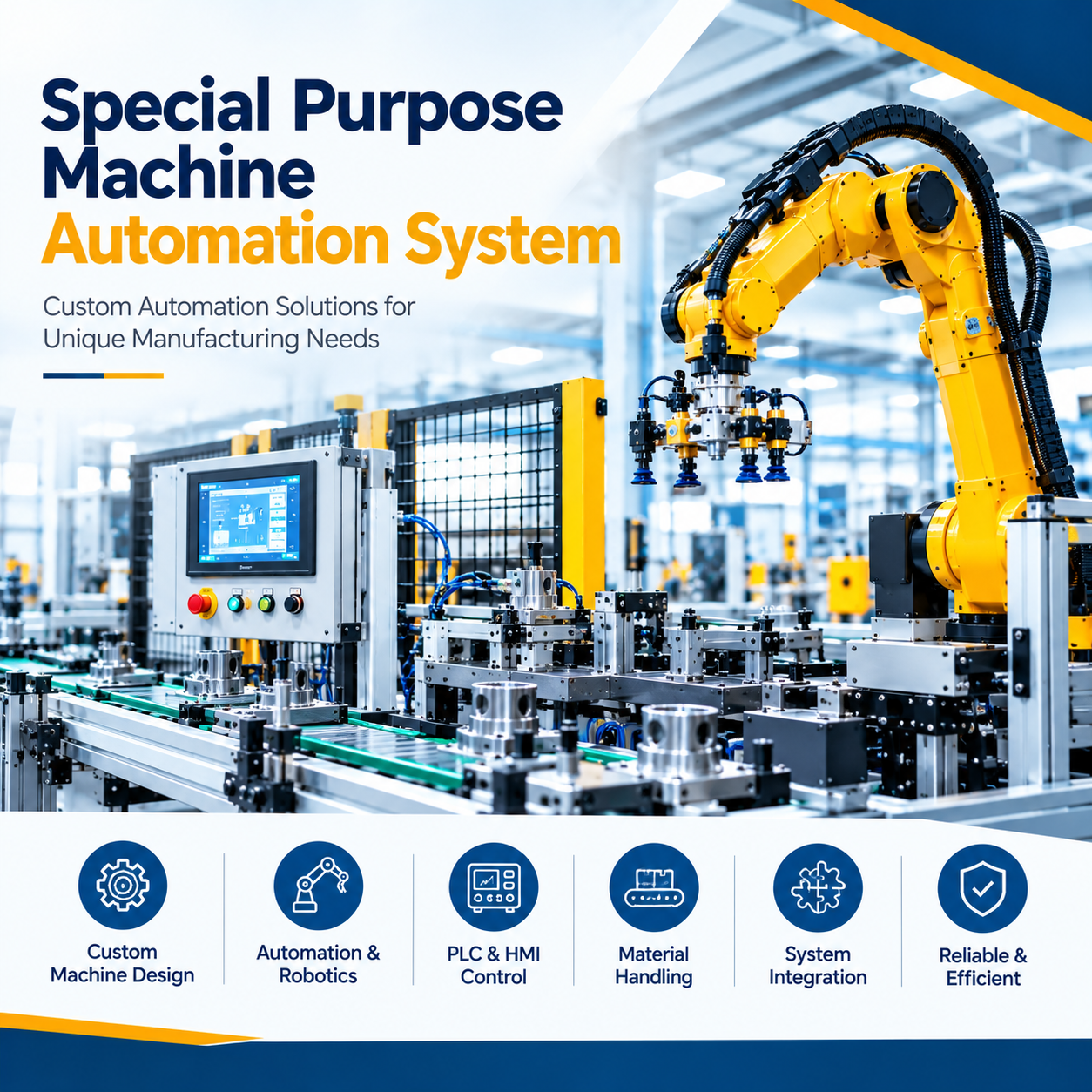 | Industrial Automation Solutions & System Integration Special Purpose Machine Automation System Customized Automation Solutions for Specialized Manufacturing Ikodeautomation provides customized Special Purpose Machine (SPM) Automation Systems... View product → |
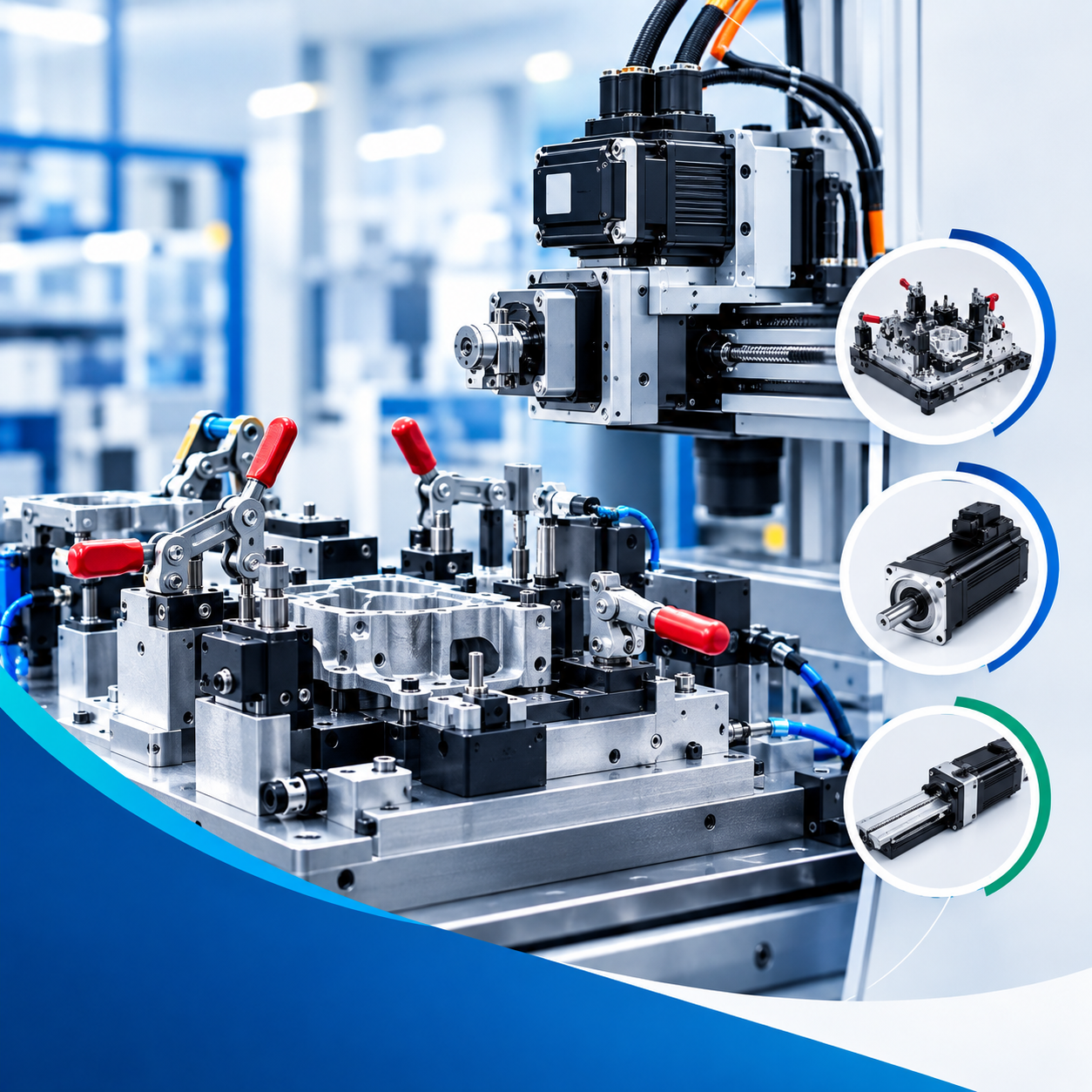 | Industrial Automation Solutions & System Integration Jig Fixture & Servo Automation System Ikodeautomation provides professional Jig Fixture & Servo Automation solutions designed to improve manufacturing accuracy, productivity,... View product → |
Frequently asked questions
What measurable requirements should Pune OEMs define before buying machine automation?
Specify cycle time, production quantity, availability, reject rate, accuracy, operating limits, changeover time and acceptance evidence.
How should an OEM choose an automation architecture?
Match the architecture to the process: PLCs for sequencing, motion controllers for coordinated axes, robots for flexible handling, and vision systems for inspection or positioning.
Which safety, electrical, pneumatic and site conditions belong in the specification?
Document guarding, emergency stops, safety relays or controllers, electrical standards, panel requirements, air pressure and quality, utilities, temperature, floor space and installation conditions.
What controls, interfaces, data and ownership terms should the purchase define?
Name the PLC and HMI platform, communication protocols, alarm records, production data, user access, software backups, source code, passwords and documentation ownership.
What should FAT, SAT and lifecycle support include?
Define factory and site test procedures, repeatable acceptance criteria, training, spares, preventive maintenance, troubleshooting support, warranty response times and upgrade responsibilities.
Related product
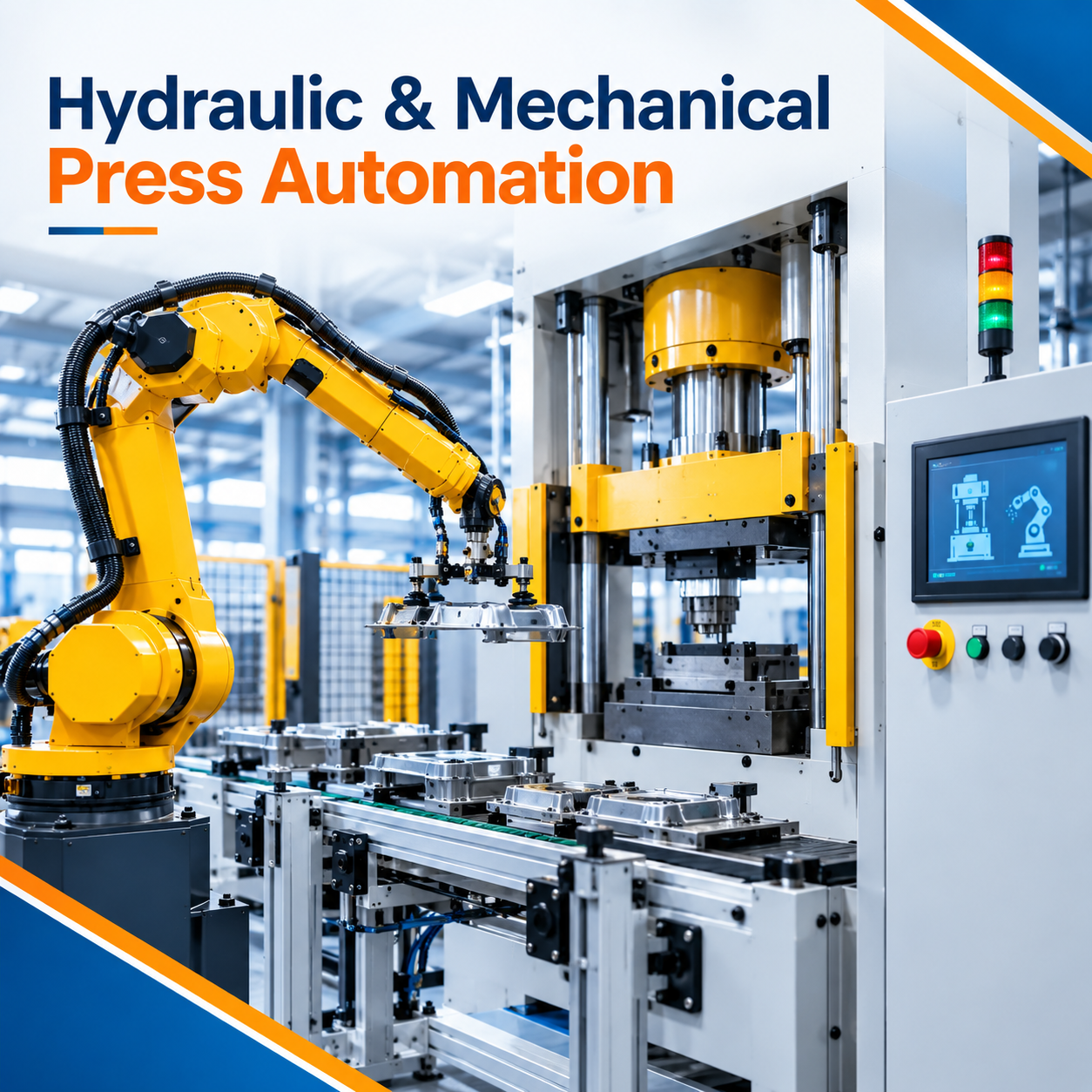 | Industrial Automation Solutions & System Integration Hydraulic & Mechanical Press Automation System Advanced Hydraulic & Mechanical Press Automation Solutions by IkodeAutomation Ikodeautomation provides customized Hydraulic & Mechanical Press... View product → |