

Choosing a pharmaceutical automation partner requires more than checking whether it programs PLCs or builds SCADA screens. You need to compare controls architecture, validation evidence, platform support, integration capability, cybersecurity, project delivery and local service coverage against the risk and scale of your plant.
Key takeaways
- Demand validated recipes, audit trails, user controls and electronic records.
- Match PLC, HMI and SCADA scope to your equipment, data and validation needs.
- Compare providers using FAT, SAT, cybersecurity and lifecycle-support evidence.
- Require backups, source-code access, network documentation and response commitments.
What a pharmaceutical PLC-HMI-SCADA provider delivers at plant level
A plant-level provider delivers the panels, field wiring, industrial networks, software, records and commissioning that connect production equipment to controlled operations. The PLC executes sequences, permissives and interlocks; the HMI provides local operation and status; SCADA supervises connected assets, alarms, trends, users and reports. That division defines pharmaceutical automation in Bengaluru.
| Area | PLC responsibility | HMI and SCADA responsibility |
|---|---|---|
| Dispensing | Control scales, barcode checks and material interlocks | Display weighments, status, alarms and electronic records |
| Granulation | Sequence charging, wetting, drying and discharge | Show batch steps, parameters, trends and deviations |
| Blending | Run timed mixing and equipment permissives | Control recipes, monitor endpoints and record batches |
| Tablet compression | Coordinate press signals, rejects and limits | Trend speed, force, alarms and production counts |
| Coating | Control spray, temperature, airflow and pan speed | Display profiles, alarms and batch reports |
| Filling | Synchronise dosing, containers and rejection | Track line status, counts, faults and interventions |
| Packing | Run conveyors, printers, cameras and interlocks | Manage line visibility, alarms and packaging records |
| Utilities | Control HVAC, water, steam, compressed air and power | Trend critical conditions and alarm excursions |
| Warehouse systems | Exchange equipment and scanner signals | Connect status and transactions with barcode or warehouse software |
Physical scope includes MCC or control panels, remote I/O, instruments, VFDs, safety circuits, server hardware and segmented OT networks. Digital scope includes ISA-88 recipe structures, alarm limits, audit trails, historian tags, user roles, reports, backups and restoration tests.
The provider must define ownership at the interfaces with MES, LIMS, QMS and ERP; SCADA is not automatically the complete manufacturing record. Require controlled development and change control for PLC logic, graphics, tags, recipes, reports, historian settings and cybersecurity configuration, because one altered program can change validated process behaviour.
How to select the right control and data architecture
Choose architecture by production scale, batch complexity and record ownership, not by the software label. A pharma PLC HMI SCADA automation provider in Bengaluru should separate equipment control from MES, LIMS, QMS and electronic batch records; GMP impact depends on the records and decisions the complete system supports.
| Option | Best fit | Batch and data boundary | Wrong choice when |
|---|---|---|---|
| Standalone machine HMI | One machine or small cell with local operators | Basic ISA-88 equipment phases; local trends and alarms, limited historian | You need plant-wide genealogy, central audit trails or cross-area reporting |
| Plant SCADA | Multiple connected areas, utilities and warehouse systems | Supervises PLCs, coordinates equipment and stores a central historian; use ISA-88 recipes for repeatable batches | You need ERP planning, laboratory results or full electronic batch records |
| Web SCADA | Distributed viewing across approved plant clients | Browser access to live data and alarms, with controlled server-side historian and security | Unreliable network links or browser access cannot meet the required control response |
| MES | Site-wide execution, genealogy, electronic records and release decisions | ISA-95 interfaces exchange orders, materials, statuses and results with ERP, SCADA and LIMS | The site only needs machine control and basic visibility |
1. Map each process from dispensing through packing, utilities and warehouse operations, then mark every sensor, barcode system, existing PLC and manual decision that must exchange data.
2. Assign ownership: PLCs execute control, SCADA supervises, MES manages execution, LIMS owns laboratory results and ERP owns orders and materials. Do not call one SCADA database the manufacturing record by default.
3. Specify historian tags, sampling rates, retention, time synchronisation, recipe revisions and interface failure handling before selecting platforms. Require a restoration test covering PLC programs, servers, historian data, recipes, audit trails and user configuration.
What compliance and validation evidence should you demand
Demand a controlled validation package, not a compliance statement. It should link the URS to functional specifications, risk assessments, design qualification (DQ), installation qualification (IQ), operational qualification (OQ) and performance qualification (PQ). GAMP 5 supplies the lifecycle risk framework; ASTM E2500 supports science- and risk-based verification.
The traceability matrix must connect each requirement to design evidence and executed test results.
Request these records from the pharma SCADA system integrator:
- Part 11 evidence for validated electronic records, accurate copies, restricted access, authority checks, operational checks, audit trails, training and accountability policies.
- 21 CFR 211.68 tests showing authorised users alone can change programs, master records and data; input and output checks confirm accuracy; backup data remains available.
- EU GMP Annex 11 evidence covering intended-use validation, qualified infrastructure, controlled access, GMP-relevant audit trails, retention and periodic evaluation.
- Access-role matrices, password rules, account reviews, time-synchronisation settings and evidence that PLC, HMI, SCADA, historian and report timestamps use a controlled source.
- Backup and restoration test records covering PLC programs, servers, historian data, recipes, audit trails and security configuration.
Require approved protocols, signed results, deviations, impact assessments, corrective actions and change-control records for PLC logic, tags, graphics, alarms, recipes, reports, historian settings and cybersecurity controls. A PLC-only change can alter validated behaviour, so the supplier must show its assessment and regression testing. Restoration evidence matters more than a backup screenshot.
How to compare Bengaluru providers, platforms and project effort
Ask every bidder to price the same controlled scope, not a vague “SCADA project.” Separate PLC, HMI and SCADA work from MES, LIMS, QMS and electronic batch records, then define interface ownership under ISA-95.
A PLC change can alter validated process behaviour, so include impact assessment and change control for logic, graphics, tags, alarms, recipes, reports, historian settings and cybersecurity.
| Platform | Best comparison point | RFQ question |
|---|---|---|
| Siemens | S7, WinCC, PROFINET and PROFIBUS expertise | Which installed versions, licenses and migration tools are included? |
| Rockwell | ControlLogix, FactoryTalk and Ethernet/IP integration | Who owns software licenses and obsolete-device replacement? |
| Schneider | Modicon, EcoStruxure and Modbus TCP connectivity | Which batch, alarm and historian functions need third-party tools? |
| Delta | Lower-cost PLC and HMI applications | Can the proposed system meet validation, redundancy and lifecycle-support needs? |
| Other platforms | Interoperability through OPC UA or gateways | Who tests data quality, timestamps and failure recovery? |
Require a priced schedule covering:
- Exact I/O count, spare capacity, panel changes, alarm rationalisation, recipe count, reports and historian retention period.
- Redundant PLC, network, server, power and backup architecture, with FAT, SAT, IQ, OQ, restoration and traceability evidence.
- Source-code ownership, editable engineering files, passwords, licences, documentation, commissioning days and support hours.
- Calibration, legacy reverse engineering, shutdown duration, travel, operator retraining and post-startup support.
Compare total effort, not the lowest panel price. A pharma manufacturing automation company such as IkodeAutomation |08048033508 should state exclusions clearly, especially for undocumented legacy logic and production-data interfaces. Ask for milestone payments tied to approved specifications, tested deliverables and accepted site performance.
Related products
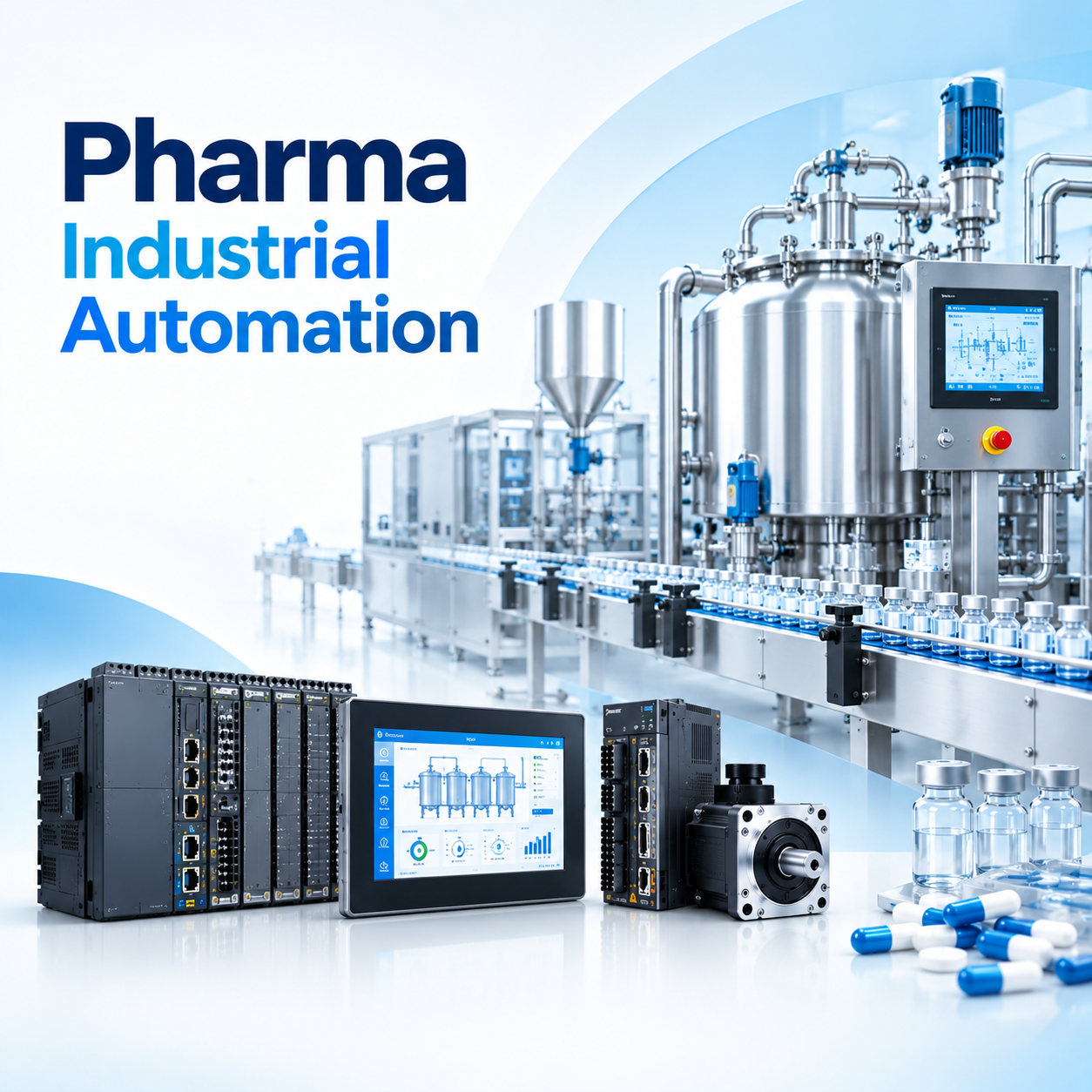 | Industrial Automation Solutions & System Integration Pharma Industrial Automation System Smart, Reliable & Scalable Automation for Pharmaceutical Manufacturing Ikodeautomation is one of the best industrial automation solution providers... View product → |
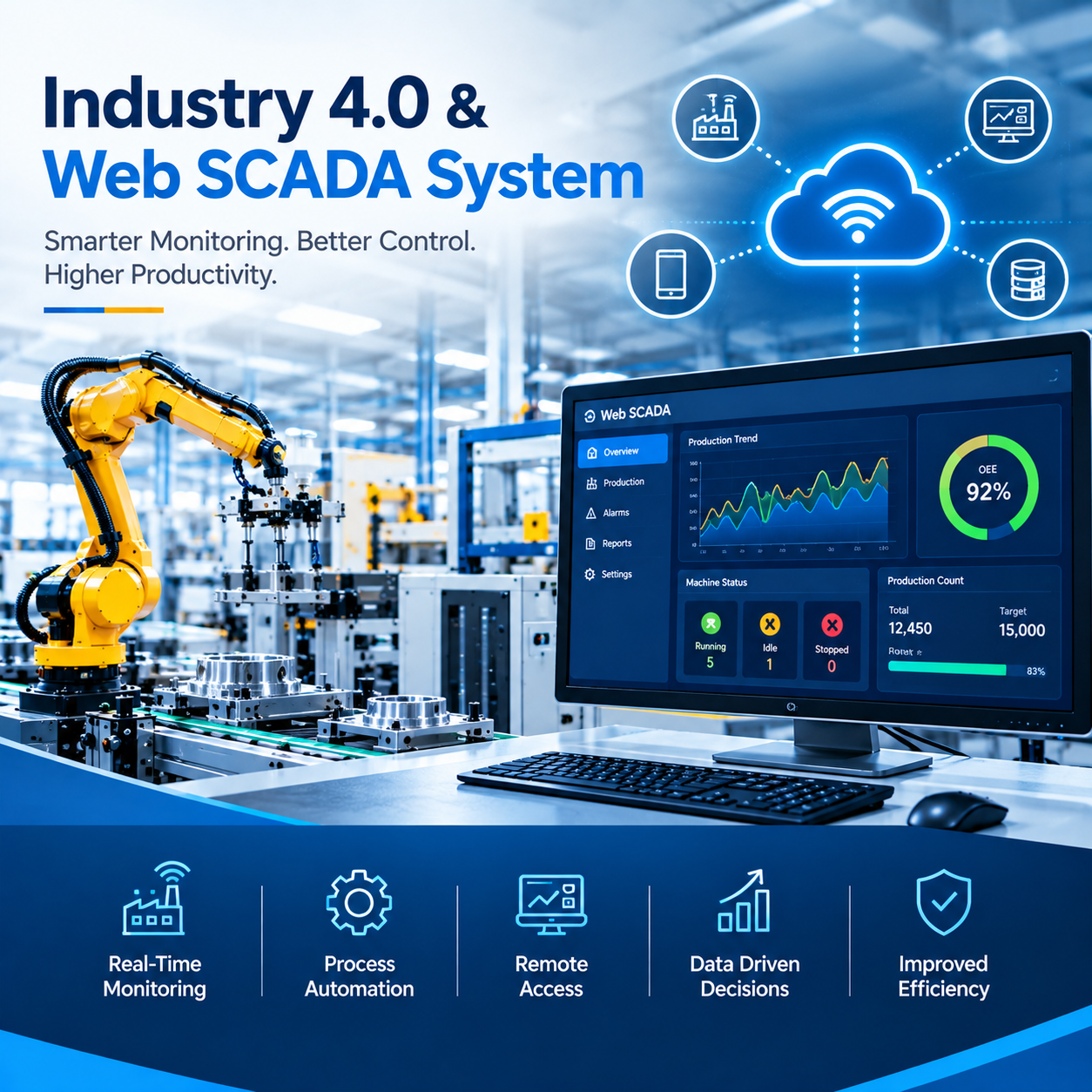 | Industrial Automation Solutions & System Integration Industry 4.0 & Web SCADA System Smart Industrial Monitoring and Web-Based SCADA Solutions Ikodeautomation provides Industry 4.0 and Web SCADA solutions for industrial automation,... View product → |
How to test delivery quality, cybersecurity and long-term support
Approve the supplier only after witnessed tests prove that the delivered system works, can be restored and remains supportable across Peenya, Bommasandra, Whitefield, Hosur Road and nearby clusters. For pharmaceutical automation in bengaluru, require the same controlled baseline at FAT, SAT and commissioning; a successful screen demonstration is not production evidence.
- At FAT, execute approved batch recipes, interlocks, alarms, reports, audit trails and user permissions with simulated I/O. Record failed tests, retests and software versions.
- At SAT, repeat critical scenarios on installed panels, instruments, networks and interfaces. Check tag names, alarm priorities, alarm rationalisation, historian timestamps and operator training using real shift procedures.
- Demand a restoration test, not a backup screenshot. Recover PLC logic, SCADA servers, historian data, recipes, audit trails, time synchronisation and security configuration after server, storage or controller loss.
- Ask the pharma scada system integrator to show IEC 62443 zones and conduits, OT-to-IT boundaries, firewall rules, least-privilege accounts and time-limited remote access. Reject shared administrator accounts and unattended vendor VPNs.
- Inspect the change log for PLC logic, HMI graphics, tags, alarm limits, recipes, reports and cybersecurity settings. An undocumented PLC change can alter validated behaviour.
- Reject hard-coded recipes, poor tag naming, unsupported operating systems and missing patch ownership. Obtain source code, backups, licence details, network drawings, training records and a named support escalation path.
Tie FAT, SAT and commissioning records to equipment qualification and continued process verification. The supplier must prove who changed what, when, why and with which approval.
Frequently asked questions
What does a pharmaceutical PLC-HMI-SCADA provider deliver at plant level?
A plant-level provider delivers control panels, field wiring, PLC and HMI software, SCADA, industrial networks, documentation, commissioning, testing and operator training.
How do you select the right pharma control and data architecture?
Map each process step, permissive, alarm, recipe, report, user role and data-retention requirement before choosing standalone, centralised or distributed control.
What compliance and validation evidence should you demand?
Request a traceability matrix, functional and design specifications, risk assessment, FAT and SAT records, IQ and OQ protocols, change history, backups and audit-trail tests.
How should you compare pharmaceutical automation providers in Bengaluru?
Compare their platform experience, panel and software scope, validation documentation, project assumptions, testing method, cybersecurity controls, schedule and long-term support.
How can you test delivery quality, cybersecurity and support?
Witness failure recovery, alarm handling, user access, audit trails, backups, restore tests and network segregation, then confirm response times and spare-parts coverage in writing.
Related products
 | Industrial Automation Solutions & System Integration HMI Programming Services Ikodeautomation is one of the best HMI programming and industrial automation solution providers, offering professional HMI development and PLC-HMI... View product → |
 | Industrial Automation Solutions & System Integration PLC Programming Services Professional PLC Programming & Automation Solutions - Ikode Automation is one of the best PLC programming and industrial automation solution... View product → |