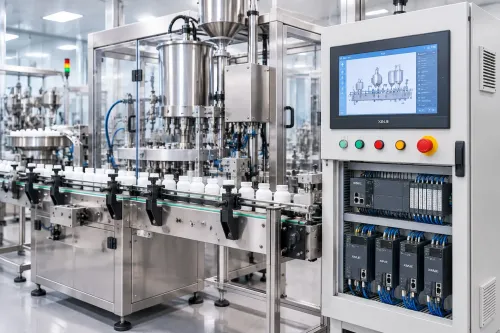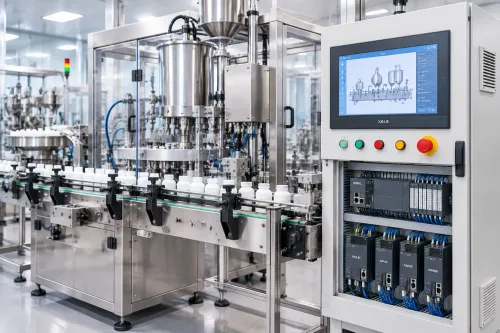

A paint line succeeds or fails before the robot starts spraying: booth airflow, fixture repeatability, coating properties, colour changes and takt time must work as one controlled process. By the end, you will be able to trace a painting automation process in Bengaluru from requirements capture and booth commissioning through robot trials, acceptance testing and operator handover.
Key takeaways
- Define substrate, coating, film thickness, cure method and takt time first.
- Design booth airflow, material routing and safety controls around the coating.
- Match the applicator, robot reach and conveyor speed to each part.
- Accept the line using cycle evidence, safety checks and trained operators.
1. Define the coating process before choosing equipment
A painting automation system must be specified from the production recipe, not the robot payload. Fix the substrate, part dimensions, masking zones, surface preparation, coating type, target dry-film thickness, finish standard, curing method, takt time and required output before selecting guns or robots.
A shifted fixture can produce a complete but misplaced spray pattern, so define part datums, carrier identification and reject handling too.
Record these inputs before requesting equipment proposals:
- Part family, weight, geometry, recesses, edges and presentation orientation
- Coating chemistry, viscosity range, solids content, colour count and pot life
- Application method, target film-thickness distribution, overspray limit and appearance criteria
- Flash-off time, oven temperature profile, cure time and maximum substrate temperature
- Hourly demand, batch size, changeover frequency, first-pass yield and operator tasks
- Temperature, humidity, dust limits and seasonal variation at the site
For a painting automation process in Bengaluru, measure ambient conditions rather than assuming one fixed setting through the year. Humidity and temperature change solvent evaporation, water-based coating behaviour, viscosity, flash-off and contamination risk.
| Process choice | Information to fix | Equipment consequence |
|---|---|---|
| Solvent-based coating | Flash-off, exhaust load and fire risk | Booth extraction, interlocks and solvent-safe supply |
| Water-based coating | Humidity, drying energy and conductivity | Environmental control and compatible fluid path |
| Electrostatic spraying | Coating conductivity, grounding and recess coverage | High-voltage controls, grounded fixtures and validation |
| Air or airless spraying | Viscosity, transfer target and film build | Gun, pump, regulator and atomisation specification |
2. Build the booth and material path around the coating
Airflow and paint delivery set the usable spray window before robot programming begins. A painting automation system in Bengaluru must account for seasonal humidity, temperature changes and dust, because they alter viscosity, solvent evaporation, flash-off, filter loading and contamination risk.
- Select the booth around the coating: use dry filtration for controlled overspray capture, water wash for high overspray loads, or an enclosed booth when containment and repeatability matter.
- Set extraction, supply air, lighting and filter capacity to maintain the specified airflow and booth pressure. Poor balance causes turbulence, dry spray, uneven film thickness and paint escaping into the plant.
- Build the material path from pump or pressure pot through regulator, fluid line, colour-change valves and gun. Size each component for the coating viscosity, delivery rate and atomisation method.
- Add temperature and humidity measurement, filtration and recipe limits. Do not compensate for a wet coating by changing robot speed without recording the environmental cause.
The PLC must permit spraying only when exhaust is running, airflow or pressure is acceptable, the recipe and colour code match, doors and guards are closed, and fire protection is healthy. A failed permissive must stop material flow, not merely display an alarm.
Keep paint lines short enough to limit pressure fluctuation, and provide solvent or water flushing, drain points and gun-cleaning equipment. Otherwise colour changes leave residue in the line and contaminate the next batch.
Test the complete path during FAT with low material pressure, an empty container, wrong colour code, exhaust loss and emergency-stop recovery. Verify that the conveyor, paint equipment, robot and safety system return to a defined state before production release.
3. Match the applicator, conveyor and robot to the parts
Manual painting suits low-volume work, frequent part changes, complex touch-up or areas that a programmed gun cannot reach. Use fixed guns when parts have stable geometry and travel past a known spray position; a fixed gun is simple, but it leaves shadowed faces and cannot follow changing contours.
| Option | Best fit | Main limitation |
|---|---|---|
| Manual painting | Low volume, high mix or repair work | Results depend on operator technique and speed |
| Fixed guns | Repeated parts with consistent presentation | Limited reach and poor response to orientation changes |
| Reciprocator | Long, regular parts or panels moving on a conveyor | Covers repeated strokes, not complex three-dimensional surfaces |
| Six-axis robot | Irregular parts, multiple faces and changing spray angles | Higher programming, safeguarding and maintenance effort |
Choose the conveyor with the applicator. A reciprocator needs predictable part spacing and a controlled travel speed; a robot needs encoder feedback or a reliable stop position when the part moves during spraying. Manual stations need safe access without disrupting automatic cycle time.
Fixtures decide whether the selected equipment reaches the surface. Set fixture datums so every carrier presents the part at the programmed coordinates, and keep clamps outside critical spray angles. A shifted fixture can produce a complete but misplaced pattern, leaving thin edges or uncoated recesses.
During automated painting system installation, verify carrier identification, part presence and reject handling in the production sequence. Check hooks, racks and workpieces for electrical continuity because cured overspray or oxidation can weaken grounding and reduce transfer efficiency.
4. Program coverage, validate safety and prove the production cycle
A dry robot cycle proves reach, not paint quality. Validate the release with production fixtures, approved recipes, actual coating materials and acceptance measurements agreed before the trial.
1. Confirm the coordinate chain. Check robot zero positions, tool centre point, conveyor tracking, part-presence sensors, fixture datums and carrier ID. Present a shifted or wrong carrier deliberately and verify that the system stops or routes the part to reject.
2. Run every programmed path at production speed. Inspect overlap, gun-to-part distance, spray angle, edge passes and recessed coverage on representative parts. Measure dry-film thickness at defined points and record runs, misses, sagging, runs and overspray.
3. Prove each colour-change sequence. Time drain, solvent flush, new-colour fill and first acceptable part; check hose dead volume, gun cleaning and waste collection. Release the sequence only after colour contamination and material consumption meet the agreed limits.
4. Challenge every safety function. Open booth doors, break light curtains, trigger emergency stops, remove air pressure, simulate high-voltage faults and interrupt conveyor tracking. The robot, pumps and applicator must enter the defined safe state, while alarms identify the cause and recovery requires authorised action.
5. Log booth temperature, relative humidity, airflow, differential filter pressure, paint viscosity and coating temperature during trials. Use coating-supplier limits; seasonal humidity and dust in Bengaluru can change flash-off, viscosity and contamination risk.
6. Run a sustained SAT with production-like parts and operators. Record throughput, first-pass yield, thickness distribution, appearance defects, changeover time, consumption and alarm recovery across the agreed sample size.
Release the line only when signed results, approved programs, recipes and recovery instructions match the tested configuration.
5. Complete handover with records, training and acceptance evidence
Routine production starts only after the industrial painting automation company proves the complete process, not merely a robot that completes a dry cycle. The handover must show that parts, paint, fixtures, safety devices and recovery procedures work together under production-like conditions.
1. Run a documented SAT using production parts, approved coating materials and normal operators. Record throughput, first-pass yield, film-thickness distribution, appearance defects, colour-change time, material consumption and alarm-recovery time. Define the measurement method and sample size for every criterion before the test begins.
2. Deliver the controlled production package: approved robot and PLC programs, recipe files, electrical and pneumatic drawings, I/O lists, network addresses, safety-validation records, paint and solvent specifications, spare-parts lists, preventive-maintenance tasks and calibration requirements.
3. Prove the production sequence with datum checks, carrier-ID validation, part-presence detection and reject handling. A shifted fixture or wrong carrier identity can produce a complete spray pattern in the wrong position, so acceptance evidence must include these fault cases.
4. Train operators and maintenance staff on loading, masking, recipe selection, colour change, cleaning, alarm recovery, safe isolation and inspection. Sign attendance and competency records, then obtain written approval against the SAT results and open-item register.
Painting line automation services are incomplete if they leave undocumented settings or undocumented changes. IkodeAutomation |08048033508 should therefore hand over backups, revision-controlled drawings and recovery instructions that let your team restore the approved cycle without depending on one engineer.
Related product
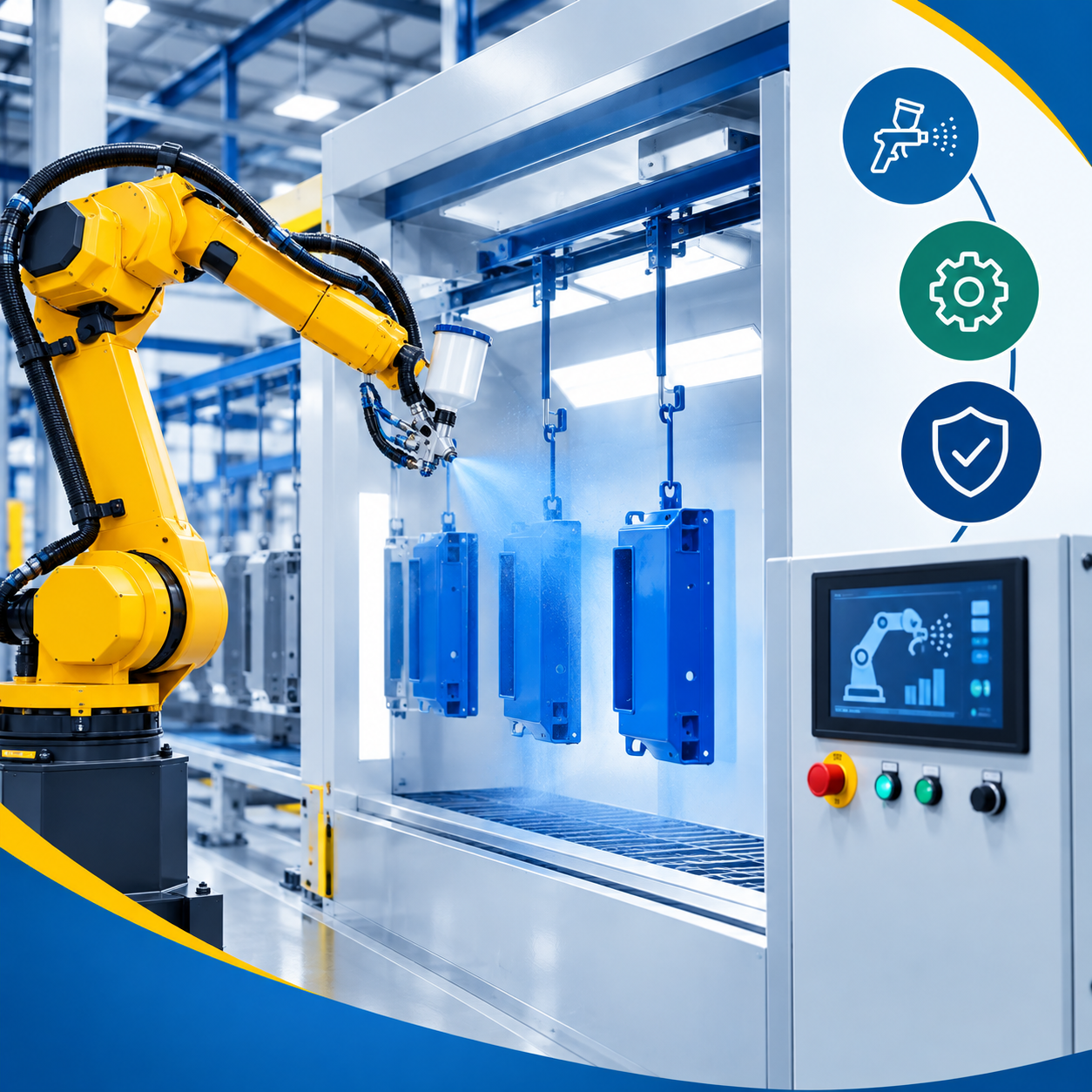 | Industrial Automation Solutions & System Integration Advanced Painting Automation Systems for Modern Industries,Painting processes in modern manufacturing require precision, consistency, speed, and... View product → |
Frequently asked questions
What must you define before selecting painting automation equipment?
Fix the substrate, part dimensions, masking zones, surface preparation, coating type, target dry-film thickness, finish standard, curing method, takt time and output requirement.
How should you design a paint booth and material path?
Build booth airflow, ventilation, material supply, overspray collection, curing transfer and safety controls around the coating process and its hazards.
How do you match a robot and applicator to the parts?
Compare part geometry, reach, access to masked areas, applicator type, conveyor movement, payload and the coverage pattern required by the finish standard.
How do you prove an automated painting line is ready for production?
Program coverage paths, validate guarding and safety functions, run the production cycle, inspect finish and film thickness, and record cycle-time evidence.
What belongs in the production handover package?
Provide approved recipes, robot programs, drawings, maintenance schedules, safety records, inspection results, operator training records and signed acceptance evidence.